
Last updated October 16, 2026
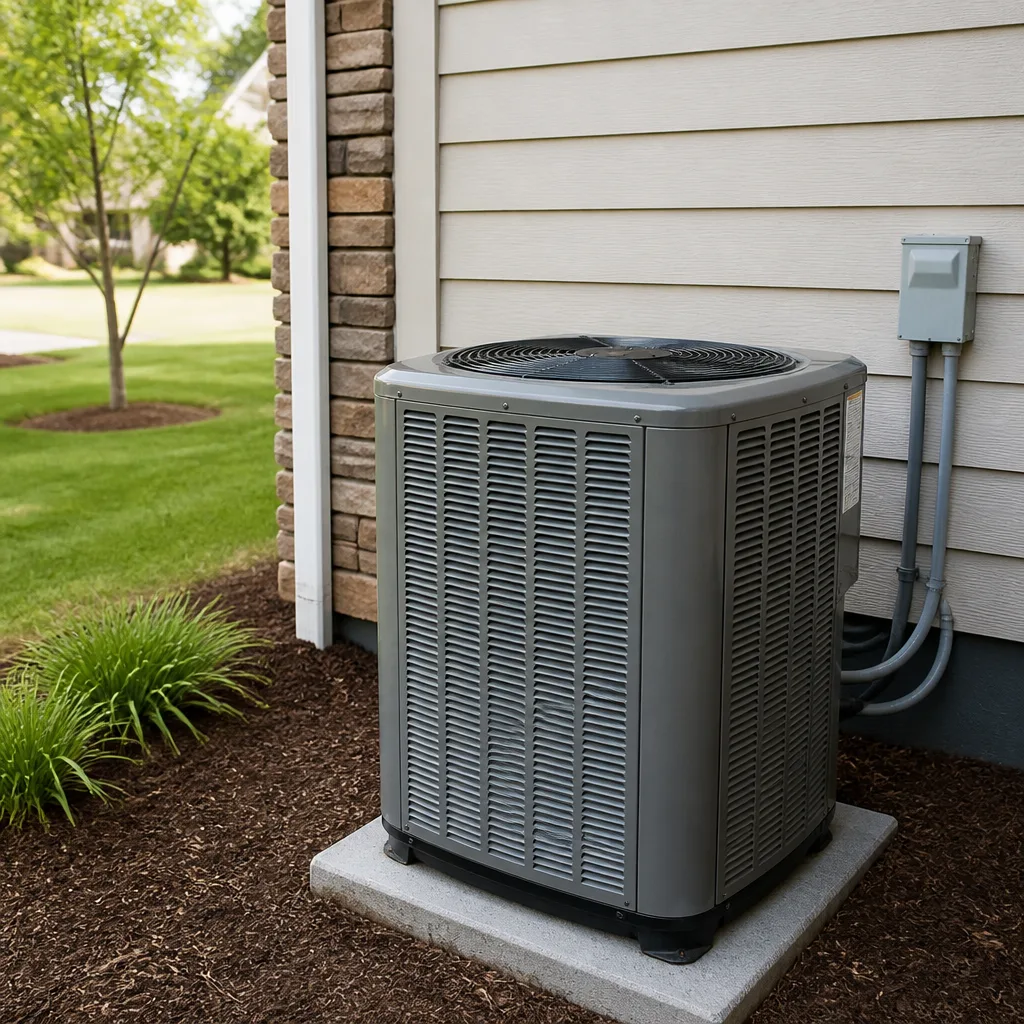 AC repair
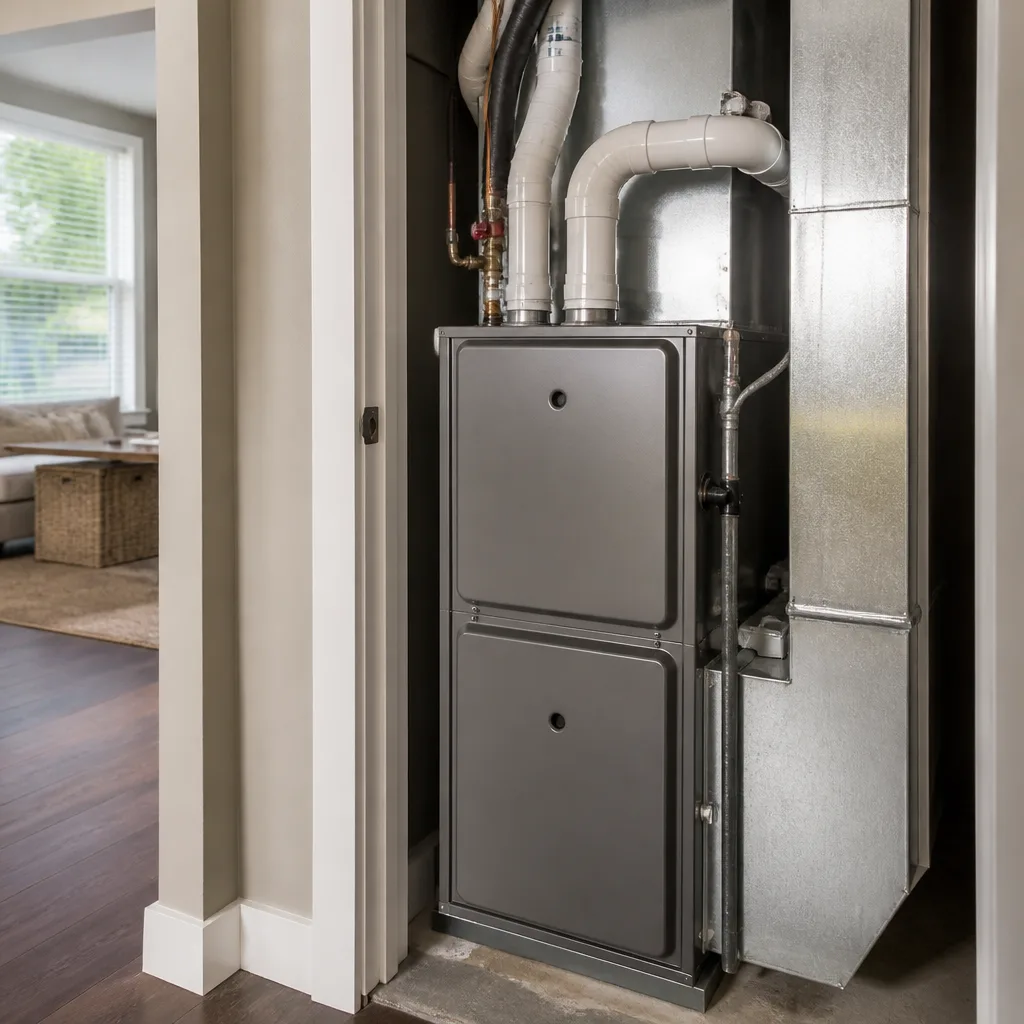 Furnace & heating
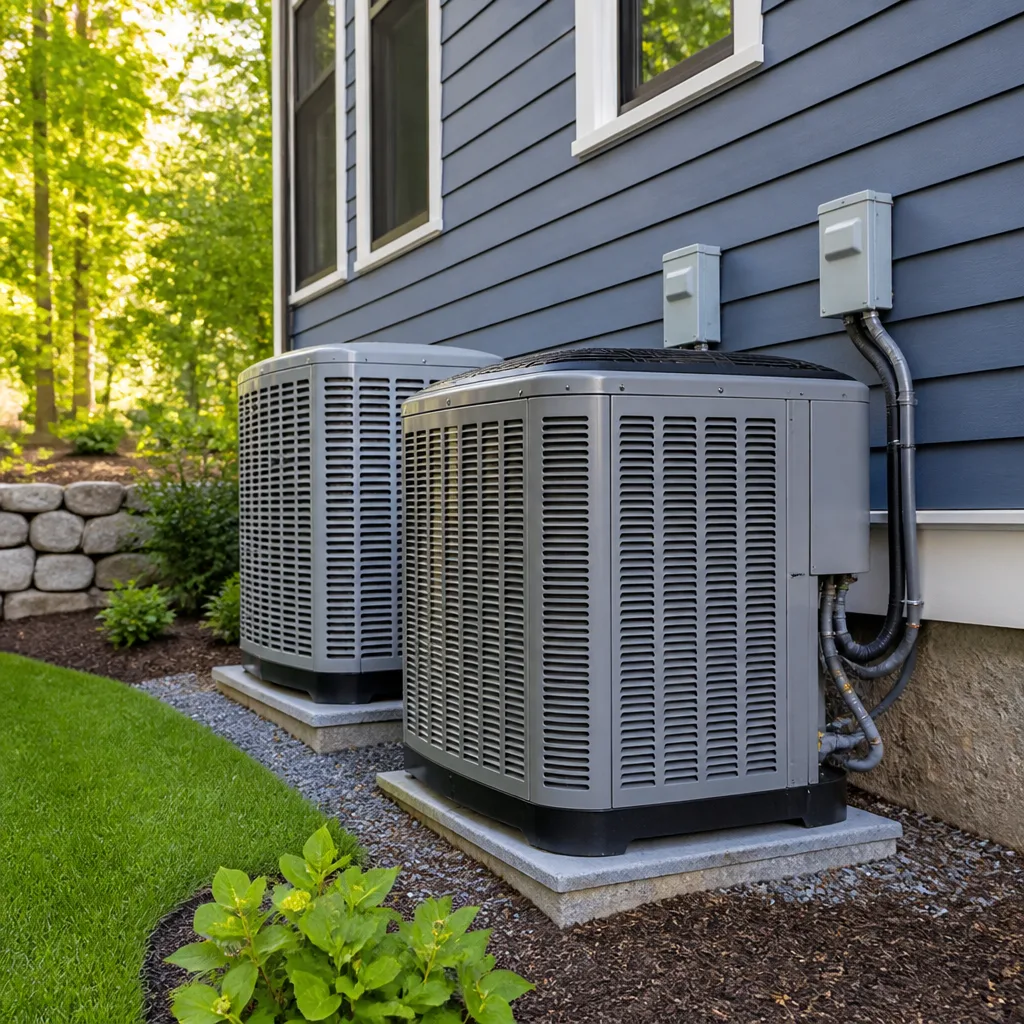 Heat pumps
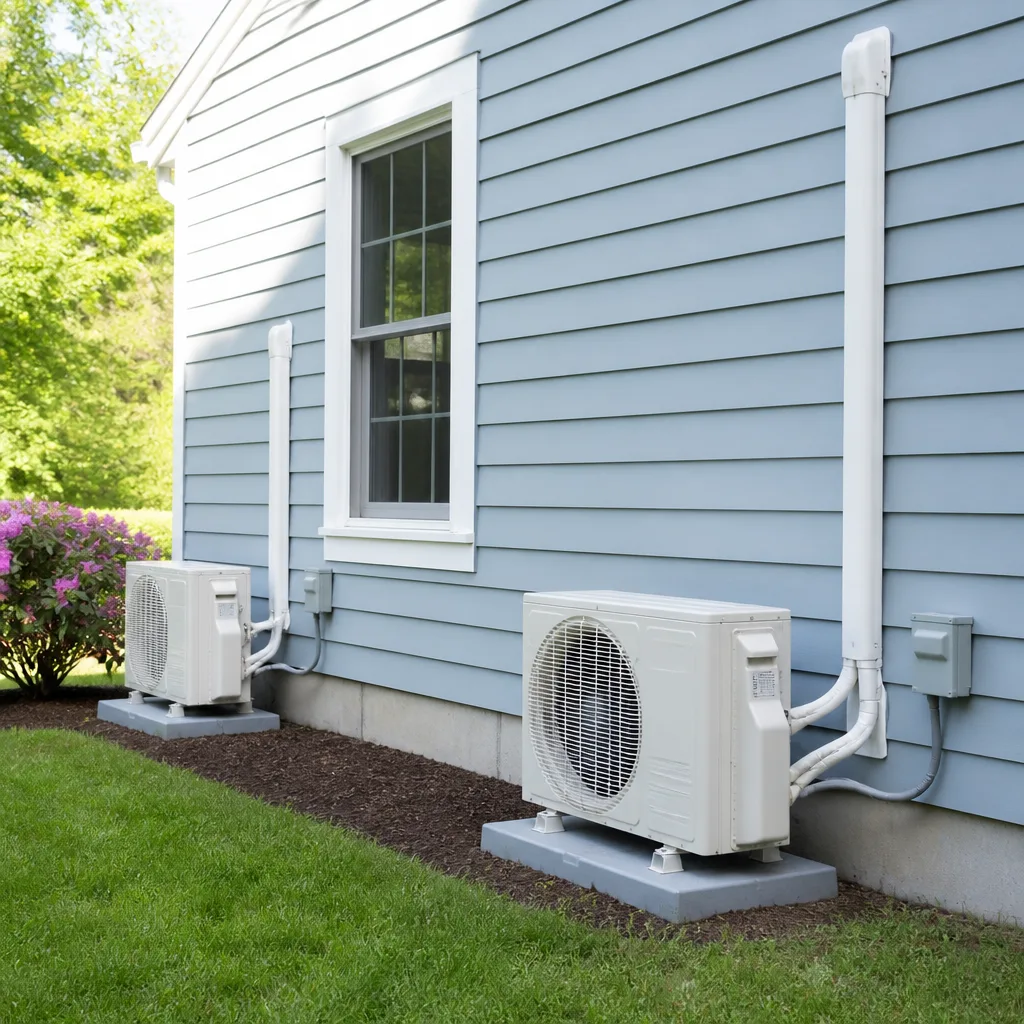 Ductless mini splits
 Carrier
 Trane
Trane Goodman
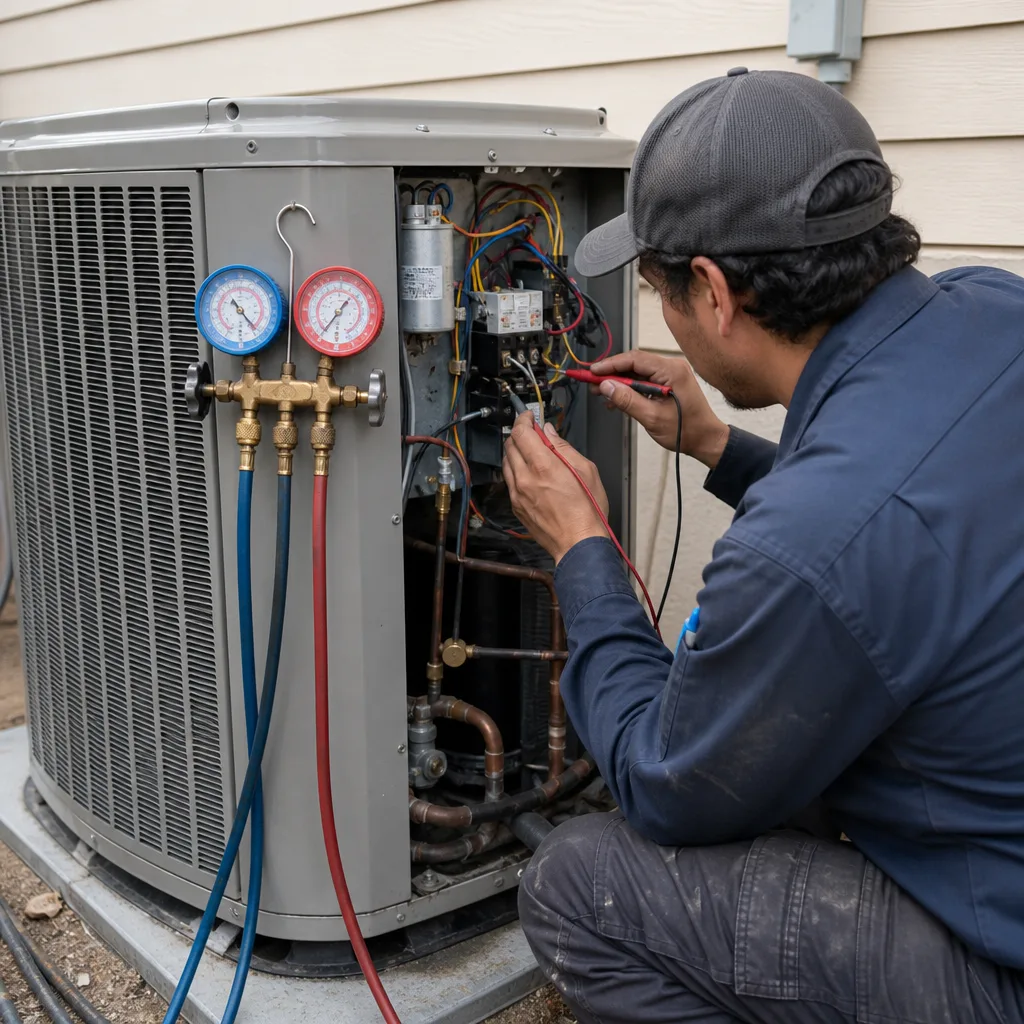
Seasonal tune-up and full diagnostic on your Carrier, Trane, or Goodman system - readings shown to you before any repair is proposed
Diagnosis first, numbers second - you approve the repair price before a single part goes in.
Get your free estimateHow to Hire a HVAC Contractor in Houston: A Step-by-Step Guide
The Texas Department of Licensing and Regulation logged more than 400 HVAC-related complaints in a recent 12-month period. The uncomfortable truth behind that number: most came from Houston homeowners who assumed a licensed-sounding business name meant a valid license. The result is predictable. Overpaying for rushed work, permits that were never pulled, and condensate lines leaking into ceilings six months later. This guide walks you through a vetting process you can complete in under 20 minutes, even when your air conditioner dies on a 98-degree Houston afternoon and every cell in your body wants to hire the first person who answers the phone. For HVAC Warning Signs: A Houston Homeowner’s Reference Guide, see our related resource.
Quick Answer
To hire an HVAC contractor in Houston, verify their Texas license through the TDLR public lookup, confirm they carry general liability insurance, request a written quote with a price lock before work starts, ask who pulls the city permit, and get the labor warranty in writing. A reputable contractor will answer these questions directly and hand you a written price without hesitation. Anyone who hedges on license verification or offers a cash-only deal during peak season is telling you something.
Styles & brands we work with
Table of Contents
- Step 1: Verify the Texas HVAC License (90 Seconds)
- Step 2: Check Insurance and Bonding Before Anyone Enters Your Home
- Step 3: Request Written Pricing With a Price Lock
- Step 4: Ask Who Pulls the City of Houston Permit
- Step 5: Understand the Difference Between Labor Warranty and Parts Warranty
- Step 6: Evaluate Background Checks and Crew Standards
- Step 7: Read the Contract for Four Houston-Specific Clauses
- Step 8: Run a Storm-Season Red Flag Check
Step 1: Verify the Texas HVAC License in Under 90 Seconds
Texas requires HVAC contractors to hold a license issued by the Texas Department of Licensing and Regulation, known as the TDLR. The license exists because HVAC work involves electrical wiring, refrigerant handling, gas connections on furnaces, and combustion venting. Done wrong, any one of those creates a safety risk inside a Houston home. Done right, the system runs quietly in a closet or attic for 15 years without complaint.
Here is the exact process to verify a license:
- Go to the TDLR website and open the license search tool. It is free and public.
- Enter the company name or the contractor’s individual license number. If the contractor cannot produce a license number when you ask, that is your first data point.
- Check the license status. You are looking for “Active.” Anything that says “Expired,” “Suspended,” “Revoked,” or “Restricted” is disqualifying.
- Verify the name matches. The business name on the invoice should match the licensed entity. A mismatch often means the person at your door is working under someone else’s license, or no license at all.
- Note the license type and any endorsements. HVAC work in Texas falls under the Air Conditioning and Refrigeration Contractor license. Endorsements cover environmental air, commercial refrigeration, or both.
In our experience across Meadowsweet Heating and Air Houston home service calls, homeowners who check the TDLR before signing spend an average of two minutes on verification. Homeowners who skip it sometimes spend months untangling work that was never permitted.
Step 2: Check Insurance and Bonding Before Anyone Enters Your Home
A valid Texas license proves the contractor passed exams and meets state requirements. It does not prove the contractor carries insurance. Those are separate documents, and both matter before a technician steps over your threshold.
Ask for a certificate of insurance, sometimes called a COI, directly from the contractor’s insurance provider. You are looking for two specific coverages:
- General liability insurance. This covers damage to your home if something goes wrong during the work. A dropped tool that cracks a tile floor, a refrigerant leak that stains the ceiling, a condensate pan that overflows into the drywall below. Liability insurance is what pays to fix that.
- Workers’ compensation insurance. This covers the technician if they are injured on your property. Without it, a homeowner can be drawn into a claim. Houston attics in July are hot enough to cause real medical emergencies. You do not want to be the one arguing about who pays the hospital bill.
Bonding is a third layer that some Houston homeowners ask about. A bond is essentially a pool of money set aside to pay out if the contractor fails to complete the job. It is less common for residential HVAC work than for larger construction projects, but it never hurts to ask. A contractor who carries all three, license, liability insurance, and workers’ comp, has made a financial commitment to doing the job properly.
Step 3: Request Written Pricing With a Price Lock
Every Houston HVAC contractor will give you a number. The difference is whether that number is written, whether it is broken down by line item, and whether it stays the same between the quote and the final invoice.
Ask for a written quote that includes:
- The exact equipment being installed or repaired, with model numbers where applicable.
- The total price, including parts, labor, and any trip or diagnostic fees.
- A statement that the written price is the final price unless additional work is authorized by you in writing.
- The date the quote was issued and how long the price is valid.
A price lock matters in Houston because peak season pricing is real. When the first 100-degree day hits in June, demand spikes and so do quoted prices from contractors who work on demand-based pricing. A written quote with a validity window protects you from a contractor who gives a verbal estimate in April and a much higher invoice in July. For a detailed look at pricing, read our HVAC Cost Breakdown: The Houston Homeowner’s Reference for 2026.
Luis Serrano, who leads AC Repair in Houston through Meadowsweet Heating and Air Houston, has a standing practice on this: the written price goes to the homeowner before any wrench turns. That standard comes from the Cedarwell Care Promise, which the Meadowsweet team has followed since joining the Cedarwell family of HVAC companies, established in 2004. The price is the price. If something changes, the homeowner hears about it and agrees to it, in writing, before the work proceeds.
Step 4: Ask Who Pulls the City of Houston Permit
The City of Houston requires permits for HVAC installations and many major repairs. The permit triggers a city inspection, and the inspection is what documents that the work meets the current code. Learn more in our guide to HVAC Permits, Codes & Inspections in TX: What You Need to Know. When a contractor skips the permit, you save a few hours of paperwork and lose something more important: the official record that the installation was done correctly.
Ask the contractor these two questions before signing:
- “Will you pull the city permit for this work?” The answer should be yes, without qualifiers. The contractor pulls the permit, schedules the inspection, and stands there to meet the inspector.
- “Is the permit cost included in my written quote?” A contractor who quotes a low price and then adds a $300 permit fee on install day is not saving you money. They are hiding it.
Permits matter for resale too. When you sell a Houston home, the buyer’s inspector will often check whether the HVAC system was permitted. An unpermitted install can become a negotiation point or a deal-breaker. The cost of the permit is small compared to the cost of explaining to a buyer why there is no city record for the new condenser sitting in the backyard.
Step 5: Understand the Difference Between Labor Warranty and Parts Warranty
This is one of the most overlooked distinctions in HVAC hiring, and it costs Houston homeowners real money when they get it wrong.
A manufacturer parts warranty comes from the equipment maker. If a compressor fails because of a manufacturing defect, the manufacturer replaces the part. Brands like Lennox, Goodman, Rheem, and York all offer parts warranties, typically ranging from 5 to 10 years, sometimes longer if the homeowner registers the equipment after installation. The parts warranty covers the component. It does not cover the labor to diagnose the problem, remove the old part, and install the new one.
A labor warranty comes from the contractor. It covers the workmanship, the time, and the effort to make a repair right. If a drain line the contractor installed starts leaking, the labor warranty is what gets a technician back to your house at no cost. The Meadowsweet Heating and Air Houston team backs every job with a 365-Day Done Right Promise, which is a written labor guarantee. If it is not done right, they make it right, with no runarounds and no fine print.
You need both spelled out before signing. Ask: “What does the manufacturer cover on this equipment, and what does your labor warranty cover?” Then ask for both answers in writing. A contractor who can answer clearly values accountability. One who waves the question away with “don’t worry, we take care of our customers” is asking you to trust a verbal promise with no teeth.
Step 6: Evaluate Background Checks and Crew Standards
The technician who comes to your Houston home will walk through your living room, past your kids’ backpacks, and into the attic or utility closet where your family’s indoor air gets conditioned. You should know who that person is before they arrive.
Ask the contractor:
- “Are your technicians background-checked?” The answer should be an immediate yes. Background checks are standard practice at reputable Houston HVAC companies.
- “Do your technicians wear uniforms and carry company identification?” A uniform and an ID badge are not vanity. They signal that the person at your door is an employee acting on behalf of a business with standards.
- “What is your policy on protecting floors and furniture during the work?” Listen for specifics. Shoe covers, drop cloths, and a clean-up process are the minimum.
At Meadowsweet Heating and Air Houston, this is codified in the C.A.R.E. values code that every technician follows: Clean up like it is their own home, Ask before moving anything, Respect the family’s time and quiet hours, Explain the price before the work. Shoe covers and drop cloths go down on every visit, and a photo of the clean-up is taken before the crew leaves. It is included on every job, not an upsell. For Furnace Repair in Houston calls during nap time or school hours, the crew works with quieter tools and respects the rhythm of a family’s day.
Step 7: Read the Contract for Four Houston-Specific Clauses
Houston’s climate creates specific failure patterns. High humidity means condensate lines clog and overflow. Summer thunderstorms mean intermittent power surges. Clay soil means foundation movement that can shift ductwork. A good Houston HVAC contract anticipates these local realities.
Look for four clauses before you sign:
- A written price lock. The contract should state the total price, the scope of work, and the equipment model numbers. No open-ended language like “plus additional labor as needed.”
- Permit responsibility. The contract should name the contractor, not the homeowner, as the party responsible for pulling the City of Houston permit and scheduling the inspection.
- Condensate and drain cleanup. Houston’s humidity means every AC install creates gallons of condensate. The contract should state that drain lines will be flushed, the drain pan will be inspected, and any overflow water will be cleaned up as part of the job.
- A dated completion promise. The contract should include a start date and a projected completion date. A contractor who will not commit to dates in writing is leaving themselves room to delay your job when a bigger one comes along.
If a contractor hands you a contract with vague language or missing dates, ask them to fill it in before you sign. A professional will. A professional will not ask you to sign an incomplete agreement.
Step 8: Run a Storm-Season Red Flag Check
Houston’s storm season runs from June through November, and it creates a predictable pattern. Storms knock out power, power surges stress HVAC components, and demand for repairs spikes. The bad actors know this. They arrive after every hurricane and severe thunderstorm with the same playbook.
Watch for these red flags:
- Unusually fast availability. A reputable Houston HVAC company is busy after a storm. If someone can be at your house in 20 minutes during a citywide surge, ask why they are not already booked.
- Cash-only quotes. Legitimate contractors accept checks, cards, and financing. A contractor who insists on cash is often avoiding a paper trail. That paper trail is your protection.
- Addresses that do not match the service area. Look up the contractor’s physical address. If the business claims to be a Houston company but lists a P.O. box in another state, that is a warning sign. Out-of-state storm chasers flood Houston after every major weather event. Some do fine work. Many do not.
- Pressure to sign immediately. A contractor who says the price is only good if you sign today is manufacturing urgency. Reputable companies give you a written quote with a validity window and let you think it over.
- No license number on the truck or the paperwork. Texas requires licensed contractors to display their license number. If it is missing from the vehicle and the invoice, you are likely dealing with an unlicensed operator.
When AC Installation in Houston demand spikes after a storm, the Meadowsweet team keeps the same standards: written pricing, permits handled, shoe covers down, and a live person answering the phone 24/7, including the night after a hurricane when the power comes back and the compressor does not.
Common Mistakes to Avoid
- Hiring based on the first phone call during an emergency. Houston’s peak heat creates pressure to act fast. A 20-minute vetting process still leaves plenty of time to get a technician out the same day, and it protects you from paying emergency markup to an unlicensed operator.
- Assuming a branded van means a licensed company. Vans can be rented and logos can be printed. The TDLR lookup is the only verification that counts.
- Accepting a verbal quote. In Texas, a verbal quote is not a contract. Get the price in writing, with a validity date.
- Skipping the permit to save money. The permit fee is a fraction of the cost of an unpermitted install showing up on a home inspection when you sell.
- Confusing a parts warranty with a labor warranty. The manufacturer covers the component. The contractor covers the workmanship. You need both in writing.
- Not asking who is actually doing the work. Some Houston companies subcontract installs to third parties. Ask if the technicians who arrive are employees of the company you hired, background-checked and uniformed.
- Ignoring the drain line. In Houston’s humidity, a poorly installed condensate drain can soak a ceiling within weeks. Ask about drain cleanup before signing.
See the difference
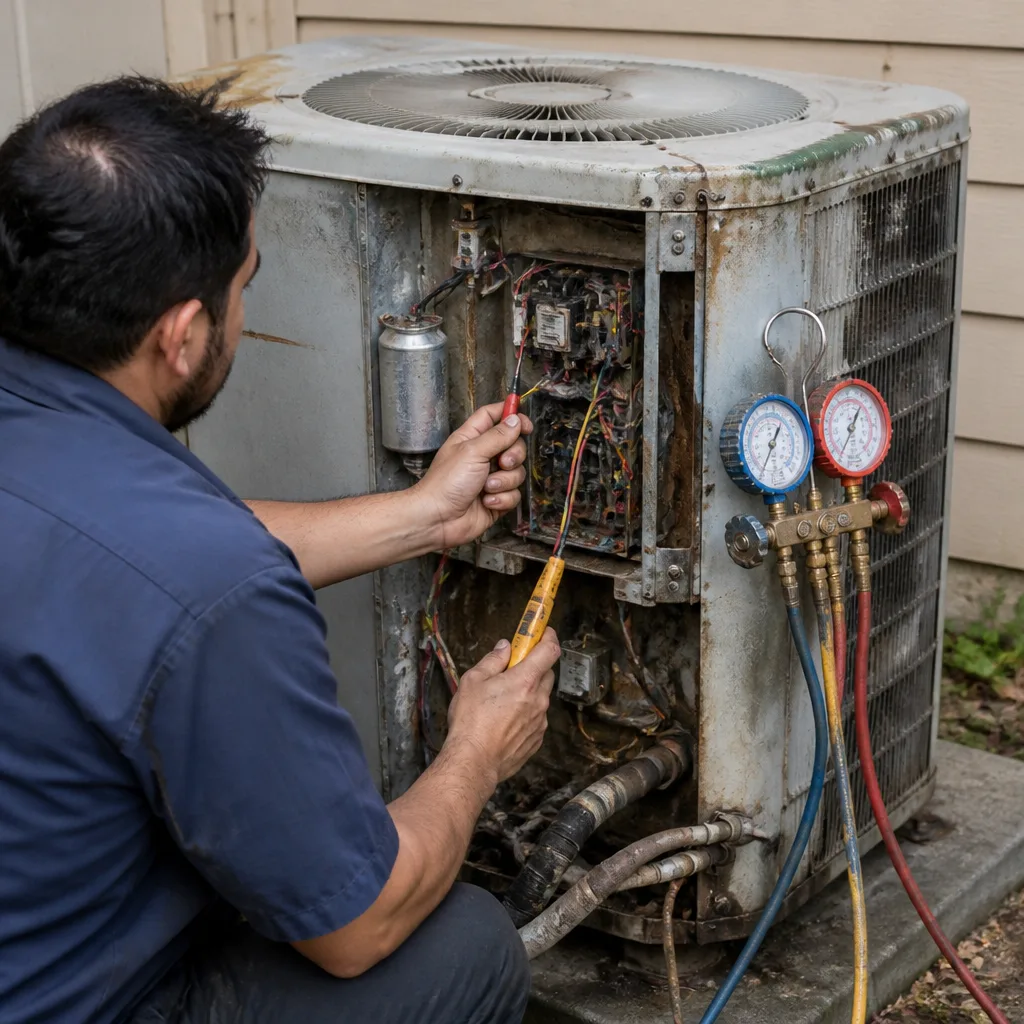 Before
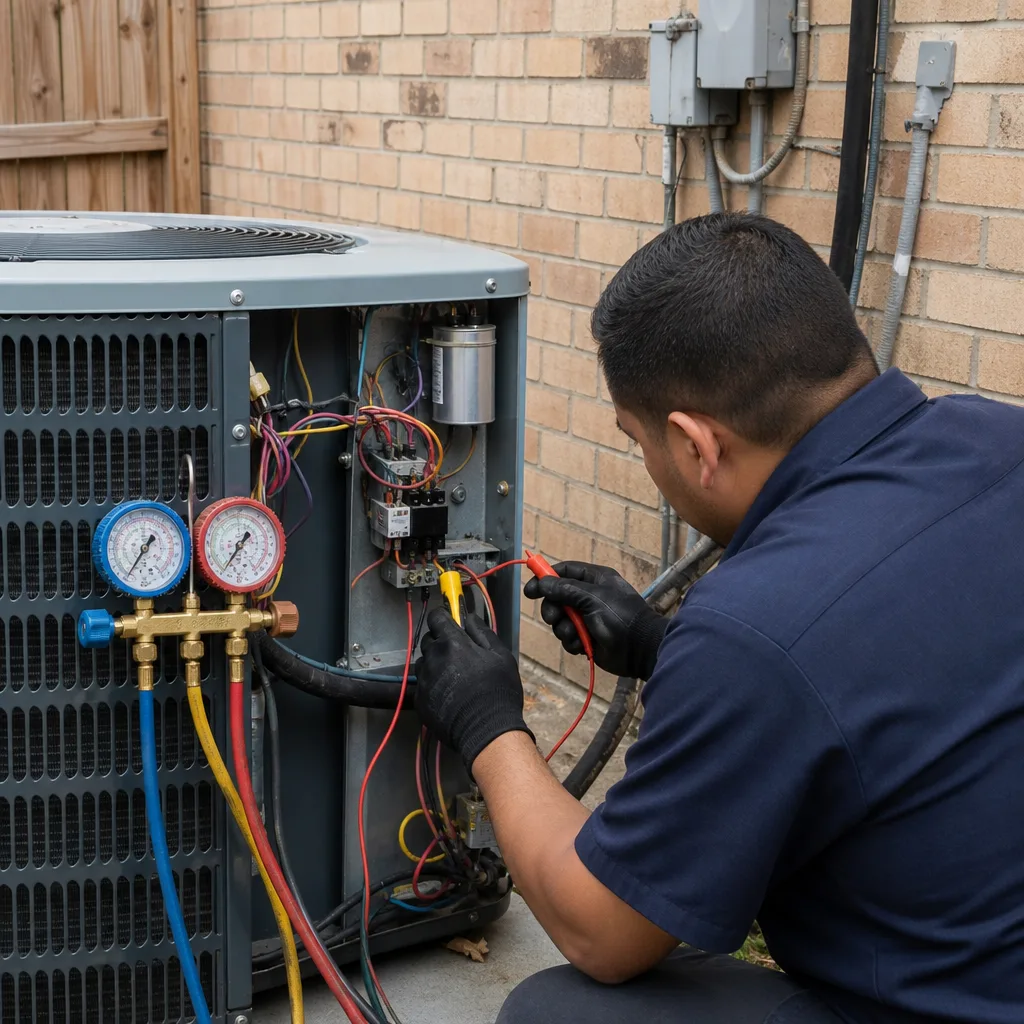 After
After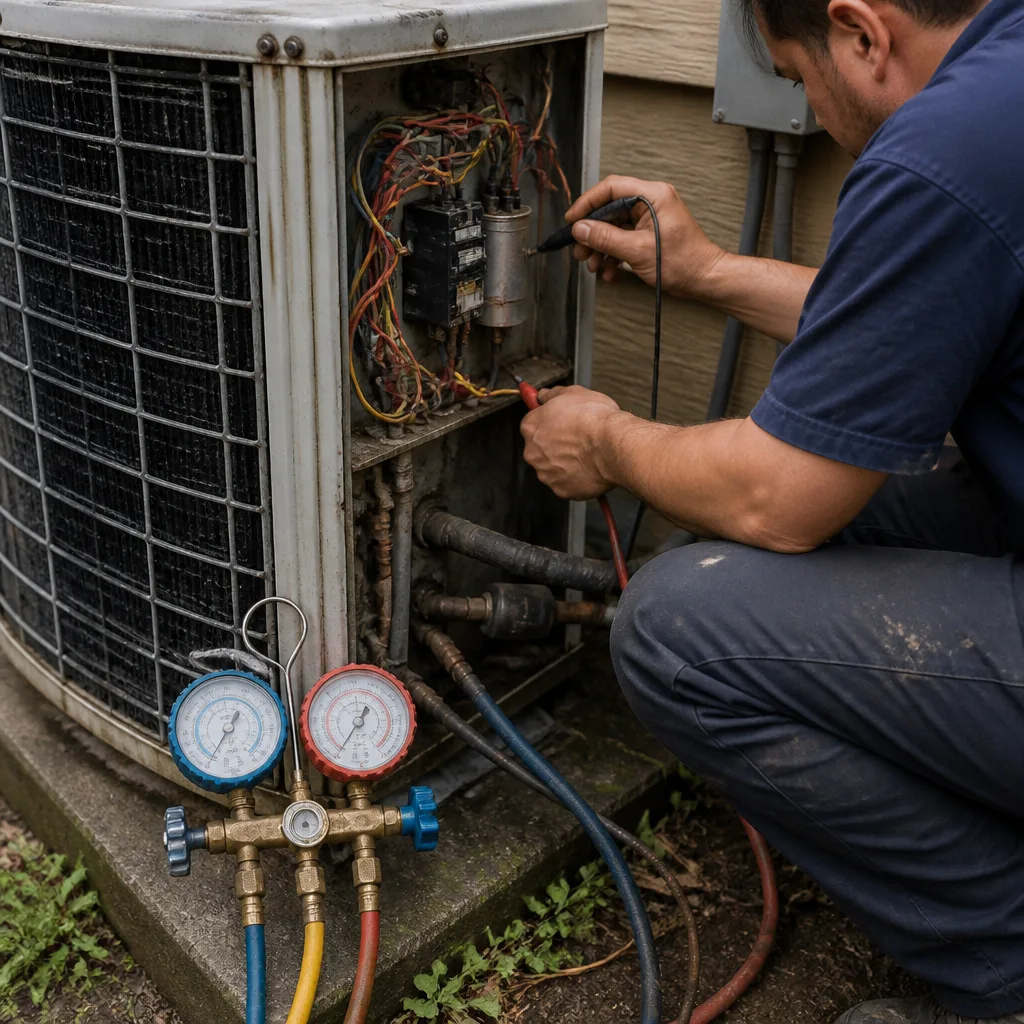 Before
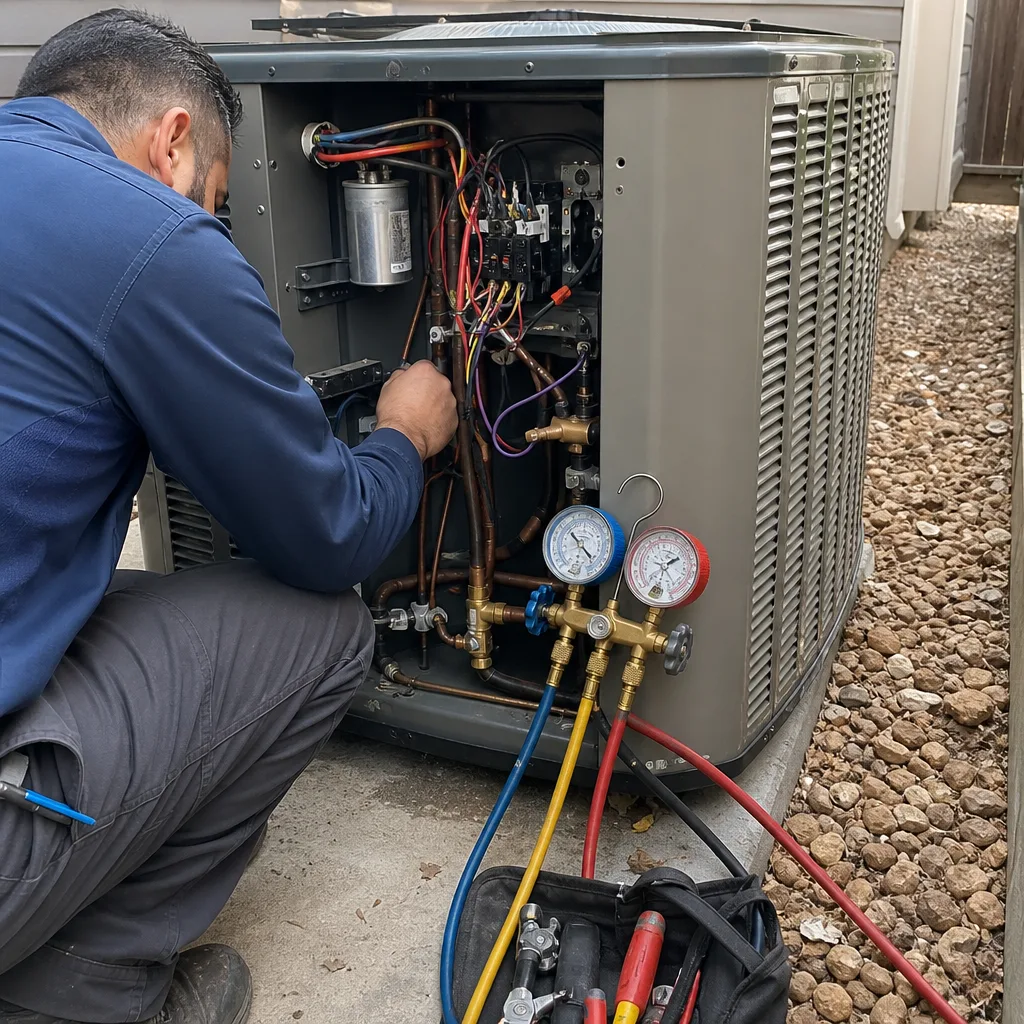 After
After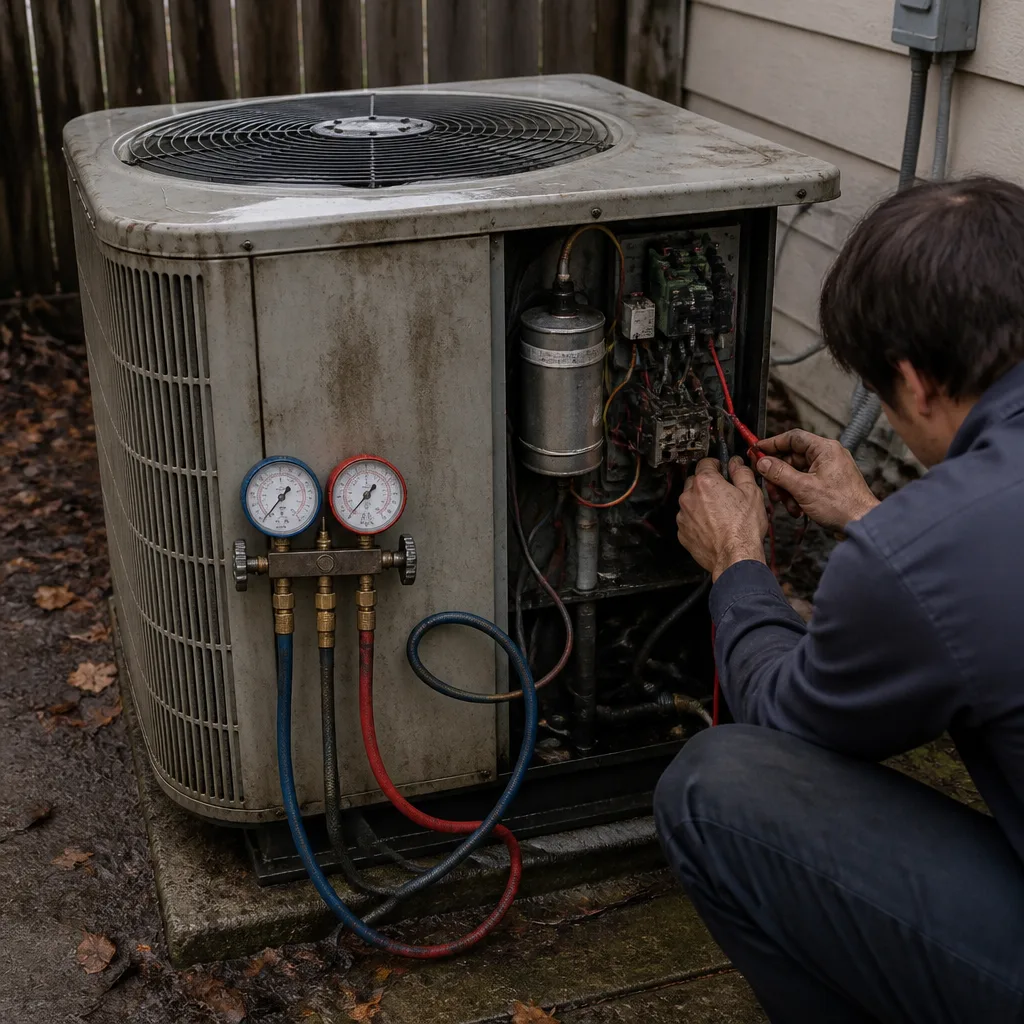 Before
 After
AfterWhen to Call a Professional
Some HVAC issues are DIY-fixable, like changing a filter or clearing debris from an outdoor condenser unit. Others are not. Call a professional if your AC is blowing warm air on a hot day and the thermostat shows a steady reading, if you smell a burning or electrical odor near the indoor unit, if water is pooling around the air handler, or if the system trips a breaker more than once. Furnace work involving gas lines or heat exchangers should always go to a licensed technician. A cracked heat exchanger can leak carbon monoxide into a Houston home, and that is not a risk anyone should manage without proper training and equipment. Meadowsweet Heating and Air Houston offers free estimates in Houston, call (346) 201-5395 to schedule one. A live person answers, day or night.
Frequently Asked Questions
Go to the TDLR public license search, enter the contractor’s name or license number, and confirm the status shows “Active.” A valid Texas Air Conditioning and Refrigeration Contractor license is required for HVAC work in Houston. If the status is expired, suspended, or the name does not match the business, do not proceed.
Most Houston HVAC repairs range from $150 to $600, depending on the part and the labor involved. Simple fixes like a capacitor replacement or a condensate line flush land on the lower end. Compressor replacements and circuit board swaps cost more. Meadowsweet Heating and Air Houston provides a written price before any work starts, so you know the exact number before you approve the repair.
Ask for the Texas license number, a certificate of insurance, a written quote with a price lock, confirmation that the contractor pulls the city permit, and the terms of both the parts and labor warranties. These five questions cover the ground where Houston homeowners most often get burned.
Repair usually makes sense when the system is under 10 years old and the repair cost is less than a third of replacement cost. Replace when the system runs over 12 years, needs a major repair like a compressor, or uses R-22 refrigerant, which is being phased out and getting more expensive. A reputable Houston contractor will walk you through the math rather than pushing toward the bigger sale.
Yes. The City of Houston requires permits for HVAC installations and many major repairs. The contractor should pull the permit, schedule the inspection, and include the permit fee in the written quote. If a contractor suggests skipping the permit to save time or money, that is a red flag.
A parts warranty comes from the equipment manufacturer and covers the component itself. A labor warranty comes from the contractor and covers the workmanship. If a manufacturer replaces a failed part under warranty but the labor to install it is not covered, you pay for the labor out of pocket. Ask for both warranties in writing before signing.
The Bottom Line
Hiring an HVAC contractor in Houston is a 20-minute vetting process that most homeowners skip in the rush to fix a hot house. Check the TDLR license, confirm insurance, get the written price, ask about permits, and understand the difference between parts and labor warranties. Watch for storm-season red flags like cash-only quotes and unnatural availability. The goal is not to find the cheapest contractor. It is to find one who gives you a written price, treats your home like a home, and stands behind the work in writing. Explore more guides & resources on our blog. Meadowsweet Heating and Air Houston does all of that on every single job, and a live person answers the phone when you call (346) 201-5395.
Written by Luis Serrano, Owner at Meadowsweet Heating and Air Houston, serving Houston since 2004.