
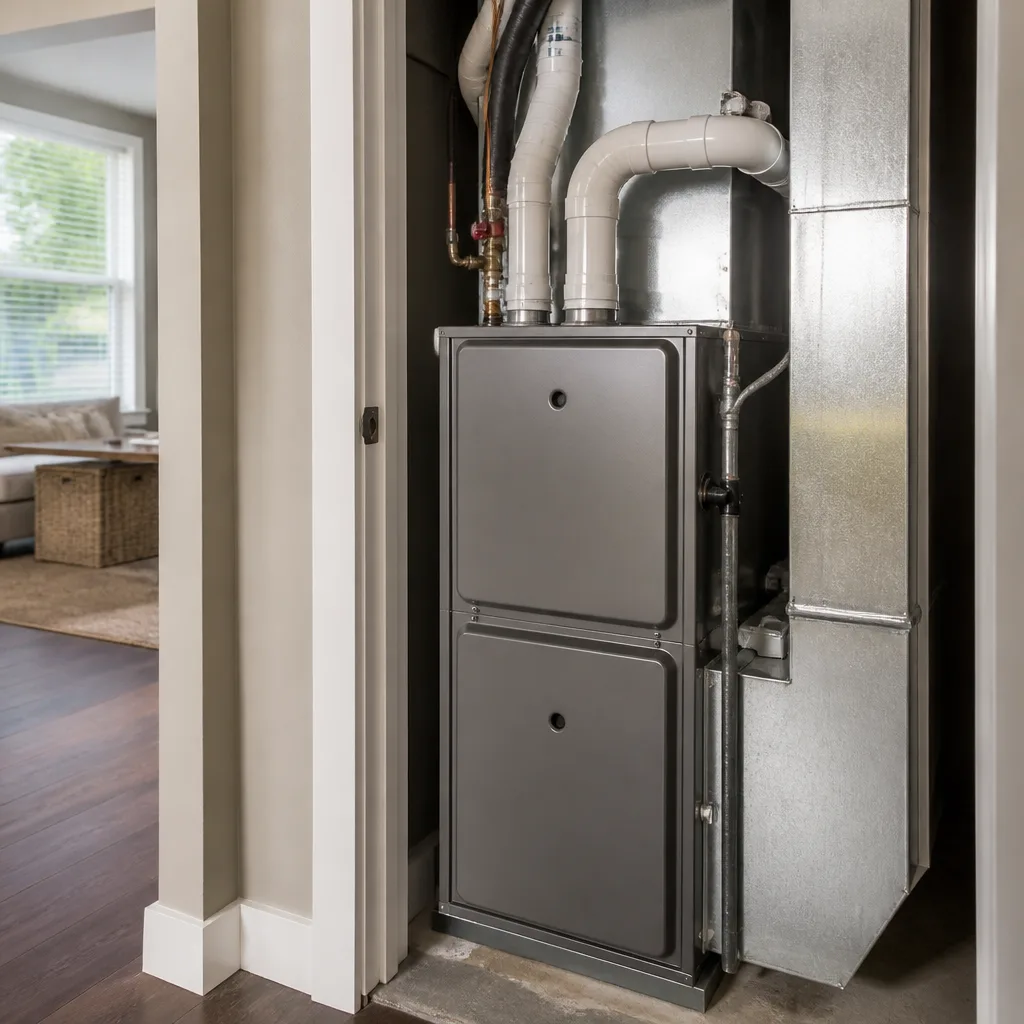
 Furnace & heating
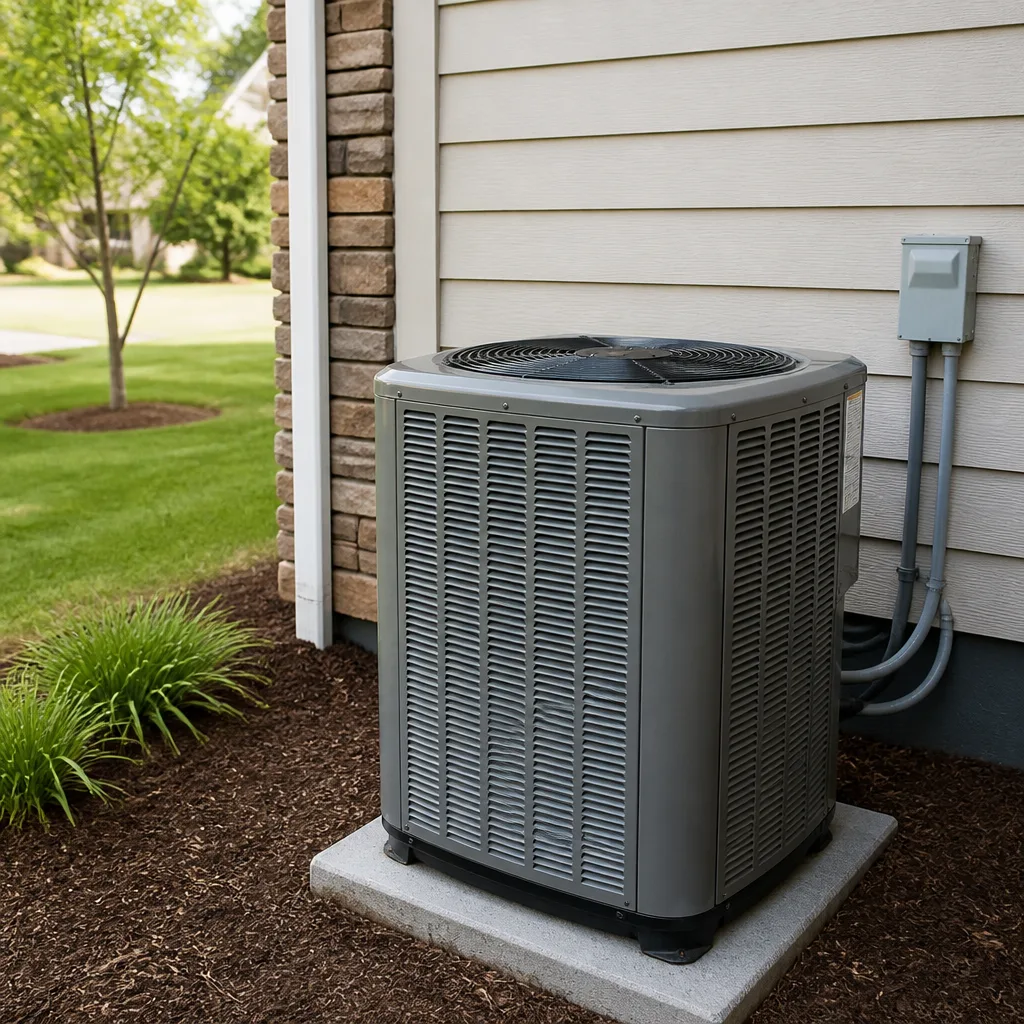 AC repair
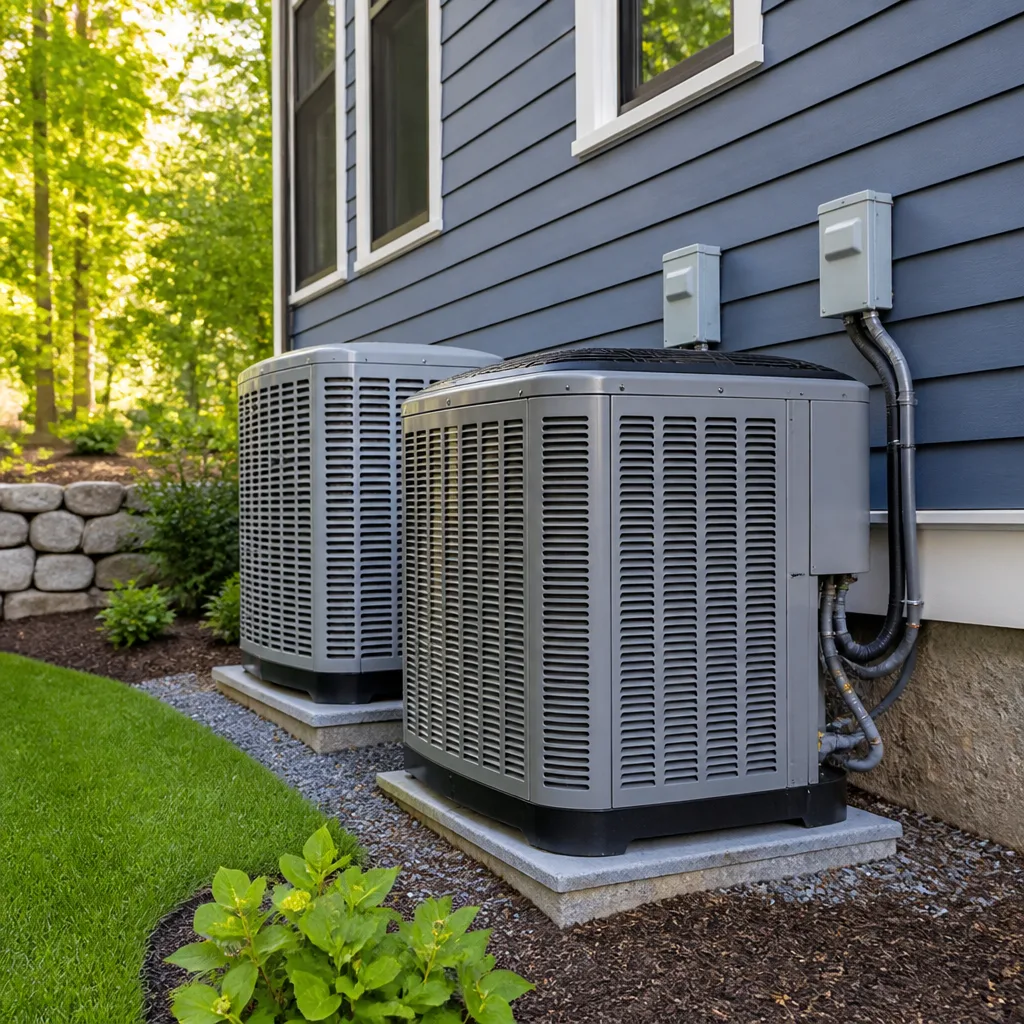 Heat pumps
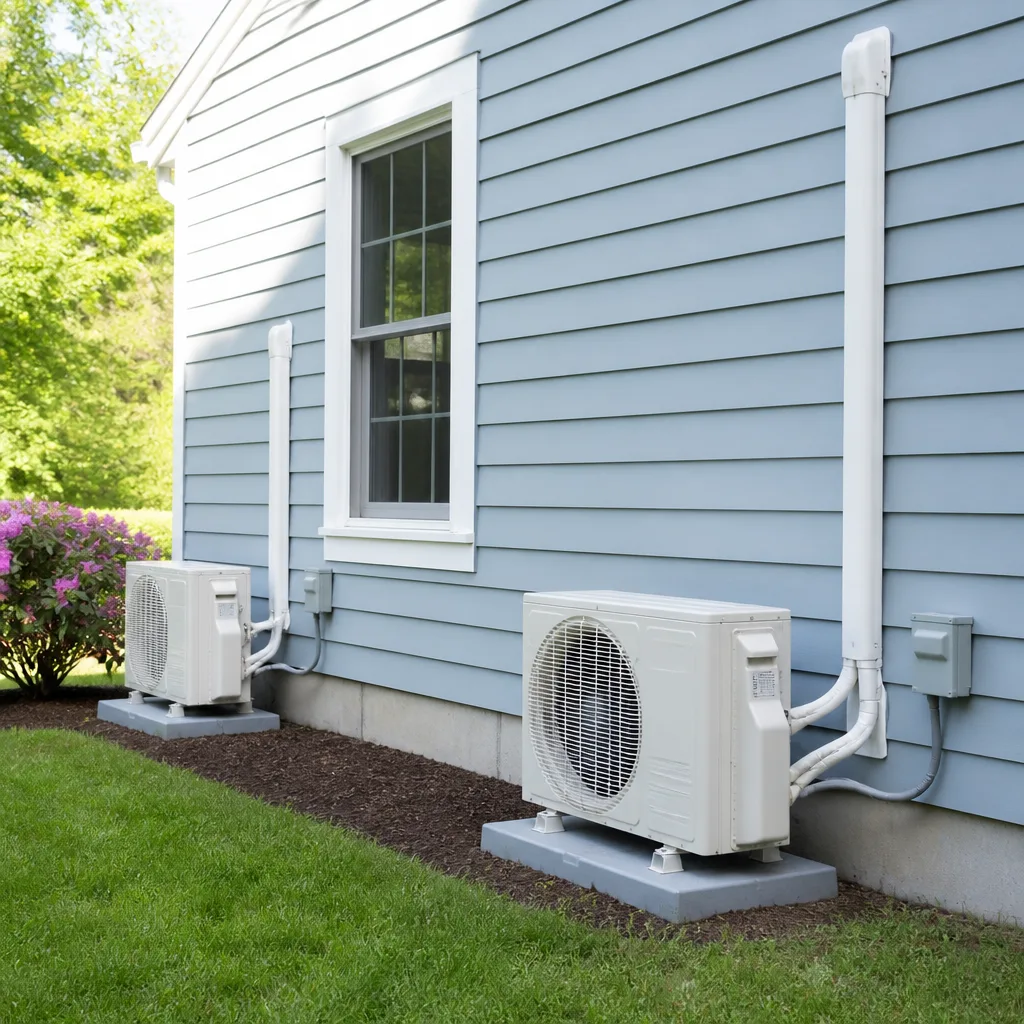 Ductless mini splits
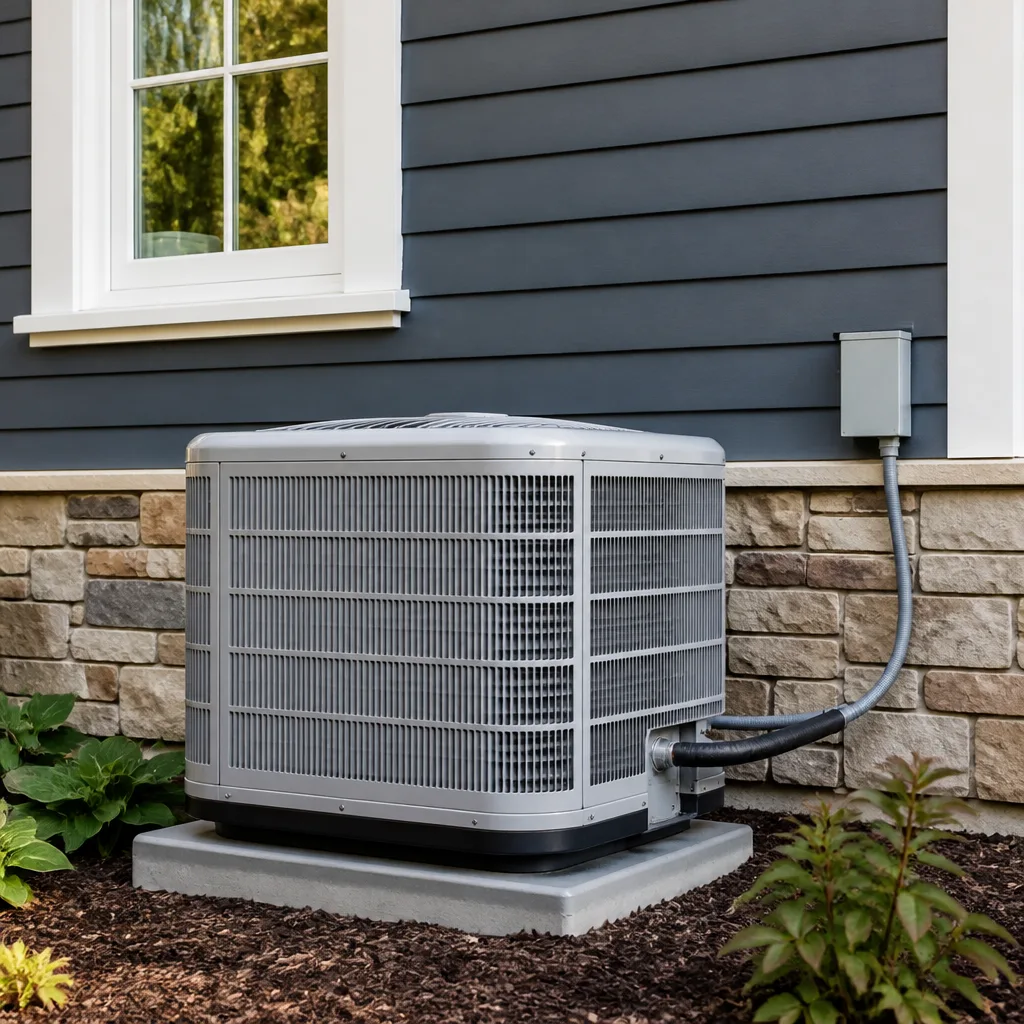 Carrier
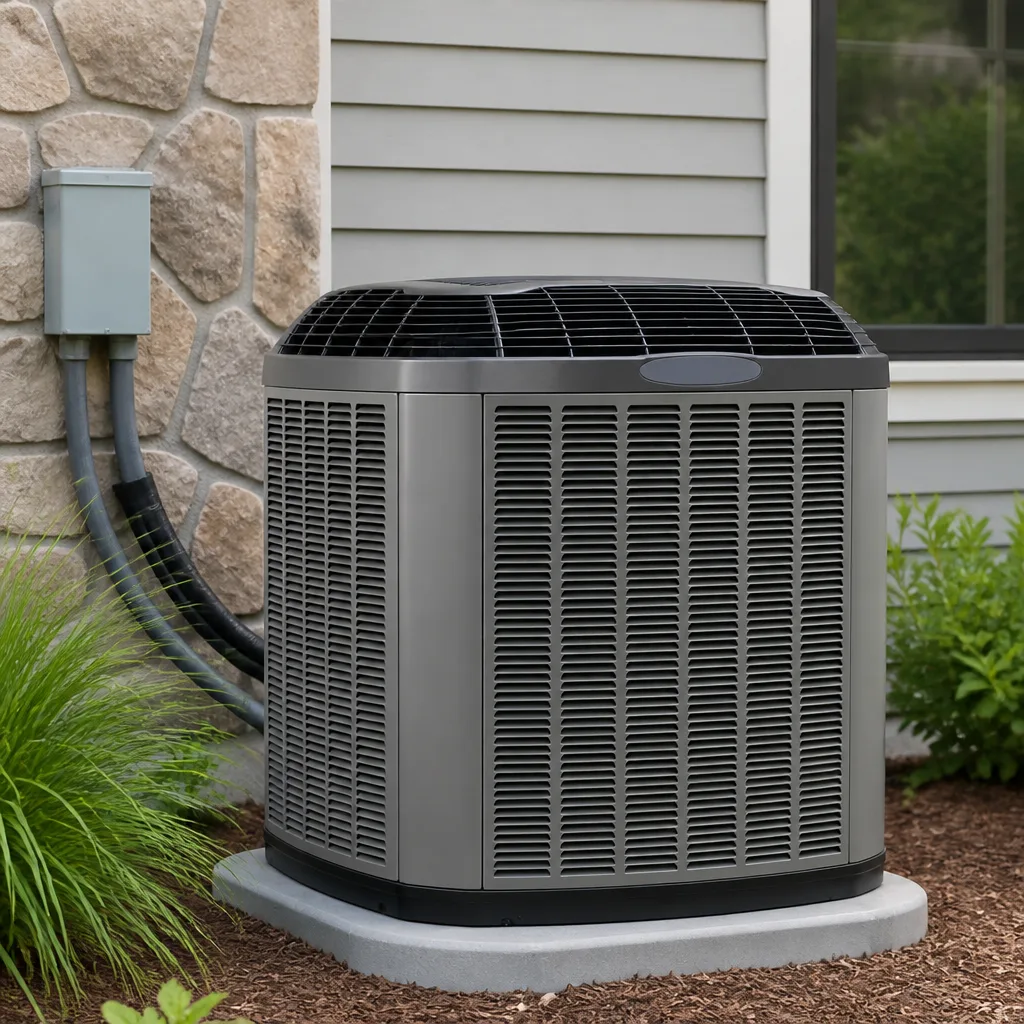 Trane
Trane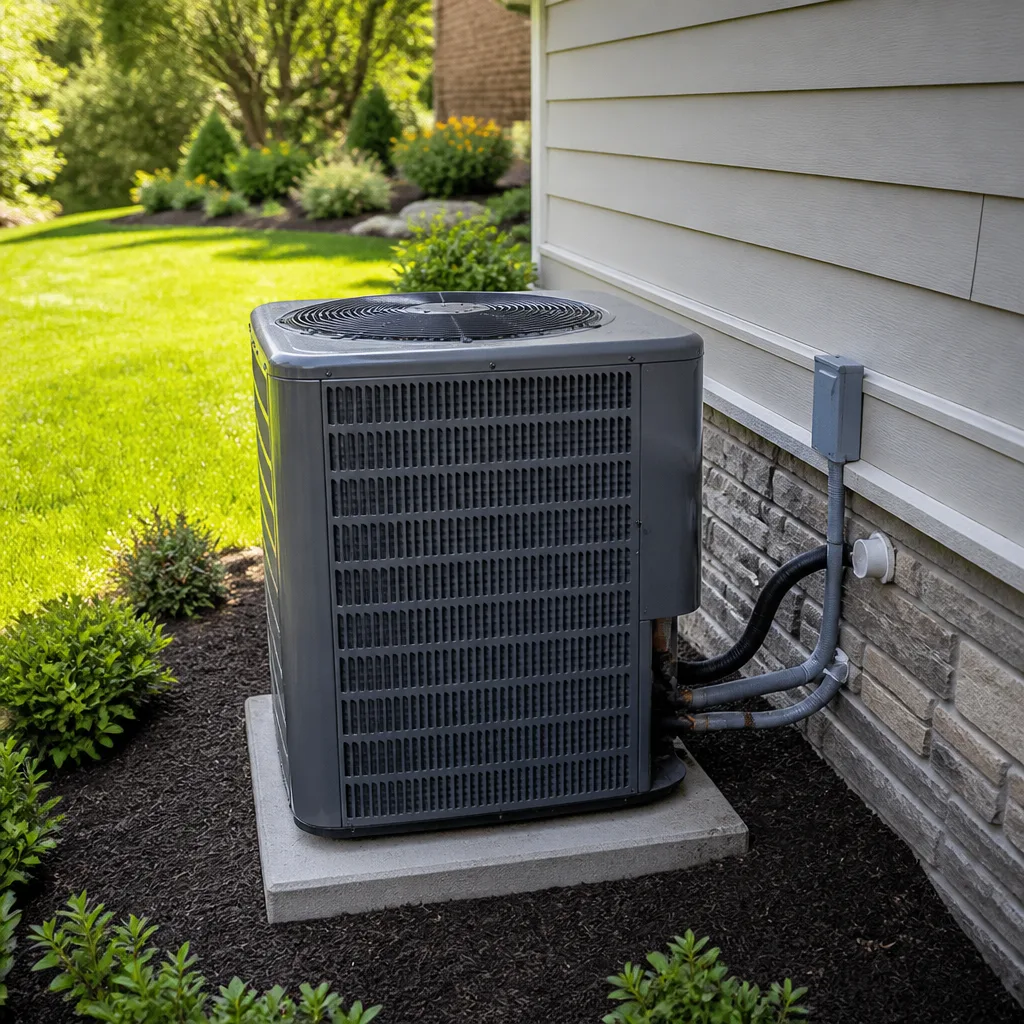 Goodman
Seasonal tune-up and full diagnostic on your Carrier, Trane, or Goodman system - readings shown to you before any repair is proposed
Diagnosis first, numbers second - you approve the repair price before a single part goes in.
Get your free estimateTrane Capacitor Replacement: The Houston Owner’s Guide
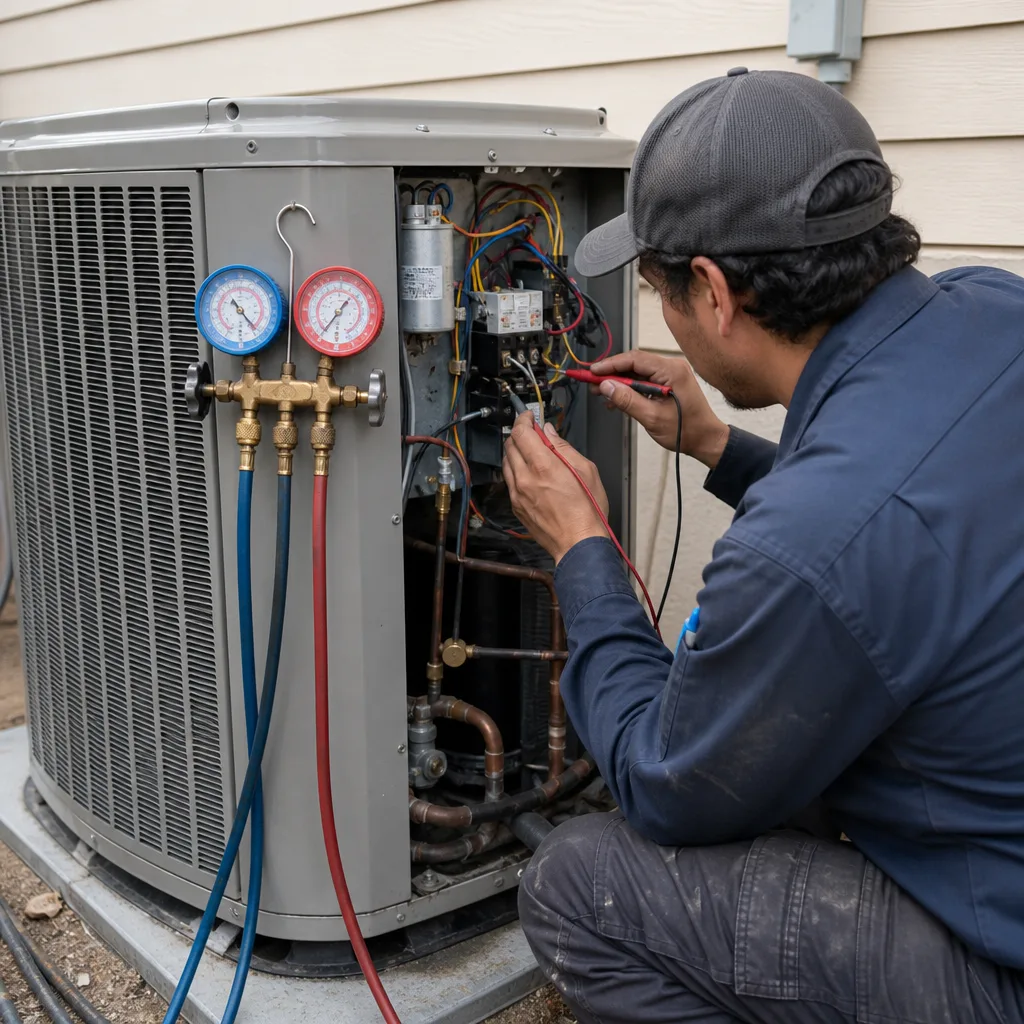
A Trane capacitor replacement in Houston typically runs $180 to $340 installed, and we almost always have the right Trane-compatible part on the truck to complete the swap same-day. A capacitor is a small cylinder inside your outdoor condenser unit that stores the electrical charge needed to start the compressor and fan motor. When it fails, your Trane will usually let you know in one of two ways: the outside unit hums but the fan never spins up, or the system starts fine in the morning and quits by mid-afternoon when the Houston heat is at its worst.
Most Houston homeowners discover the problem on a Saturday in July, when the house starts climbing past 80 degrees and the outside unit is making a low buzz that wasn’t there yesterday. Luis Serrano has walked up to hundreds of Trane condensers across the city and found the same thing: a swollen capacitor, leaking electrolyte, or a terminal that’s been baked brittle by years of Gulf Coast humidity. It’s a common failure, it’s fixable in under an hour, and it doesn’t have to mean a new system.
Which Trane Models This Applies To
If your condenser was made by Trane, it uses a capacitor. That covers the XR series (XR13, XR14, XR15, XR16), the XL series (XL14i, XL15i, XL16i, XL18i, XL20i), and the XV variable-speed line. It also includes Trane’s packaged units and many heat pump condensers, where the capacitor serves both the compressor and the outdoor fan motor.
Here’s the compatibility gotcha most people don’t know: the capacitor is matched to the motor, not the model number. Two Trane XR14s sitting side by side can need different capacitors if one shipped with a different compressor or fan motor on the manufacturing line. The only reliable way to match the part is to read the label on the existing capacitor. It will list a microfarad rating (usually 5 to 80 µF) and a voltage rating (370 or 440 VAC). That spec, plus whether it’s a dual-run capacitor serving both the compressor and fan or a single-run capacitor for one motor only, tells us exactly what belongs in your unit.
On the OEM versus aftermarket question for Trane specifically: Trane-branded capacitors are made to spec and carry the Trane label, but they’re not the only safe choice. We stock quality aftermarket equivalents from American-made suppliers that match the exact microfarad and voltage ratings of the original, and we’ve installed thousands of them across Houston without issue. The honest truth is that the aftermarket part often costs $30 to $60 less than the Trane-labeled equivalent, and the failure rate is identical. We’ll show you both prices and let you decide. We service Trane equipment as an independent provider, not a Trane dealer, which means we can source whichever capacitor is the best value for your unit without brand constraints.
Styles & brands we work with
Signs Your Trane Capacitor Replacement Is Failing
- The outside unit hums but the fan doesn’t turn. The capacitor has lost its ability to deliver the starting jolt the fan motor needs. You’ll hear the contactor click and then a low electrical hum as the motor sits stalled.
- The system runs in the morning but not in the afternoon. Heat makes a weak capacitor weaker. Houston’s 3 p.m. asphalt heat is often the tipping point. The unit will start again when it cools off, which is confusing but very common.
- The compressor trips the breaker or short-cycles. When the capacitor can’t smooth out the compressor’s electrical draw, the system pulls too many amps, trips the breaker, or shuts down on thermal overload.
- The condenser fan turns slowly or starts with a delay. A fan that spins up sluggishly, or only after a pause, is running on reduced capacitance. It’s moving air, but not enough to reject Houston’s heat load.
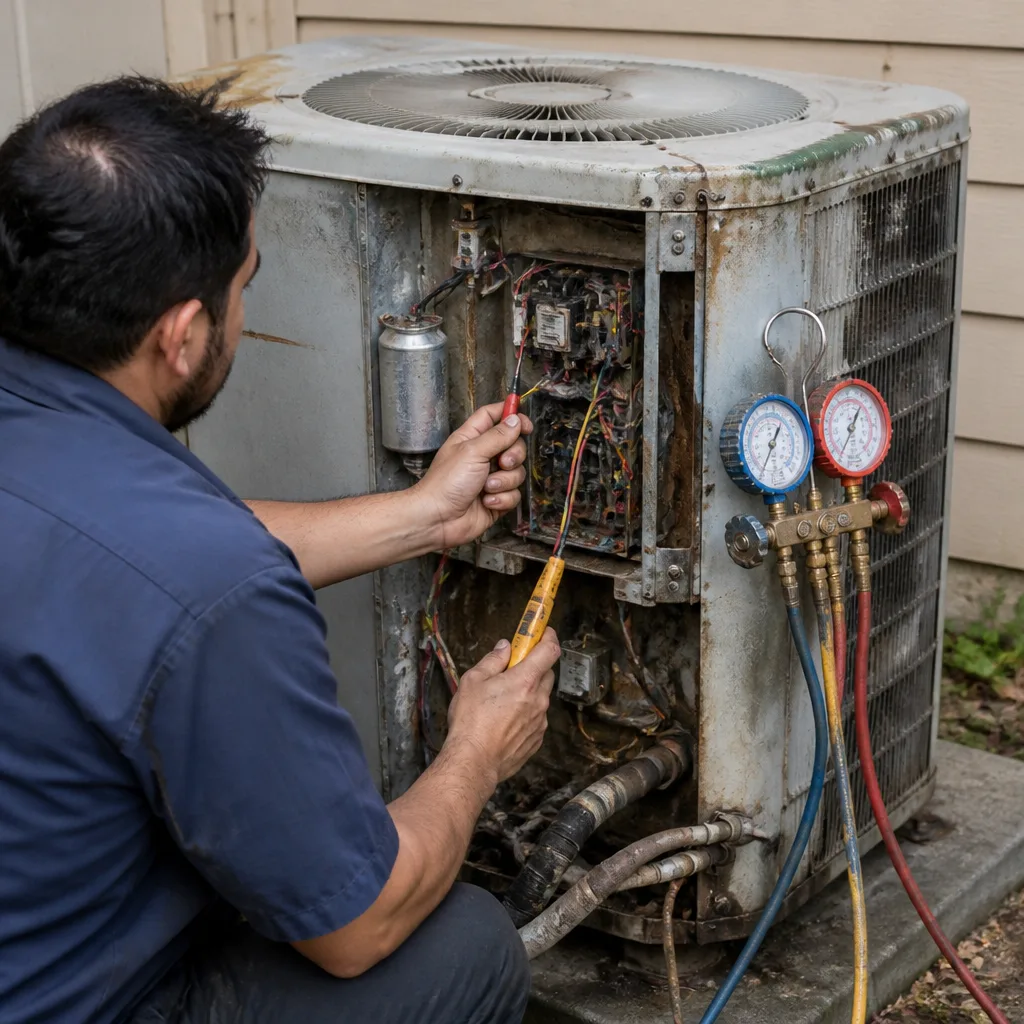
- The capacitor case is swollen, rusted, or leaking oil. This one you can see without touching anything. A bulged top or sides, or a rusty stain running down from the terminals, means the internal dielectric has broken down and the part is done.
If the capacitor has visibly swollen or leaked, stop running the system. A failed capacitor can damage the compressor motor it’s supposed to protect, and a compressor replacement is a four-figure job no Houston homeowner wants in August.
See the difference
 Before
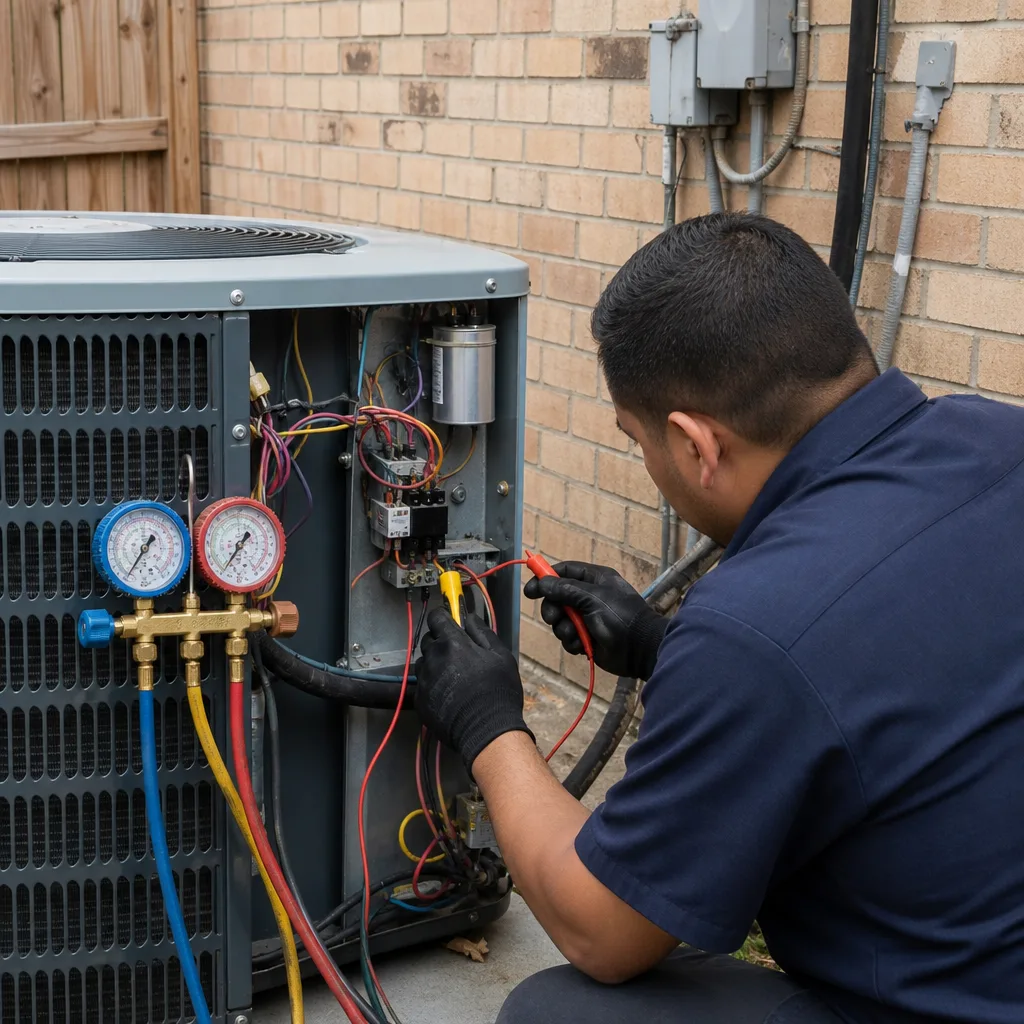 After
After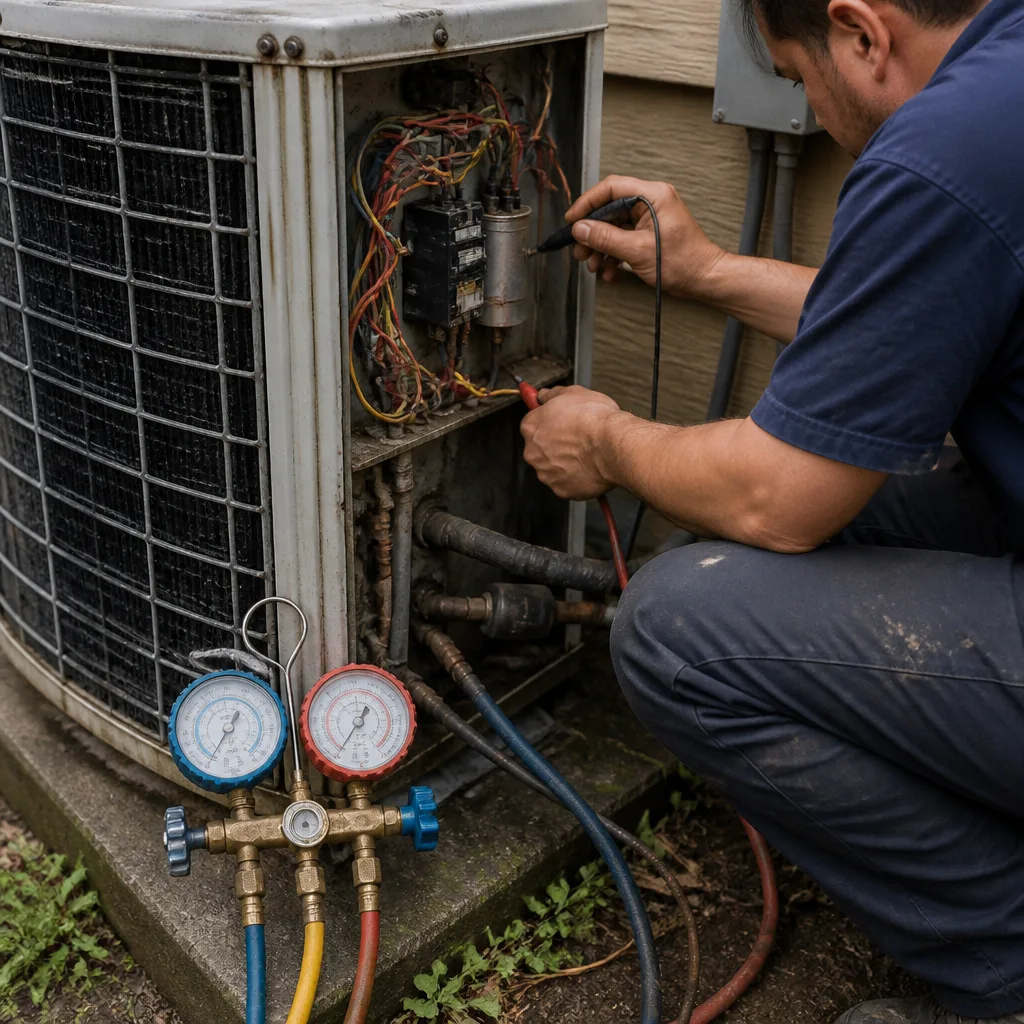 Before
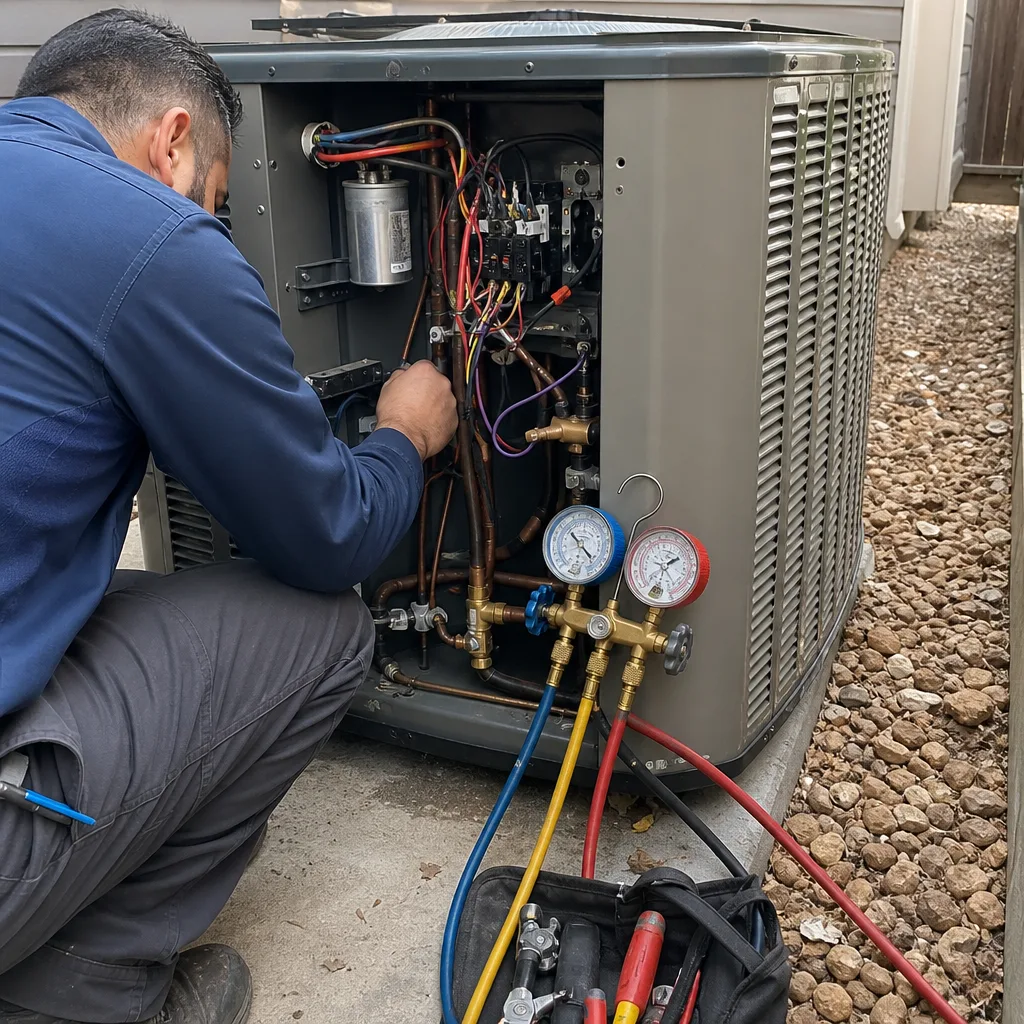 After
After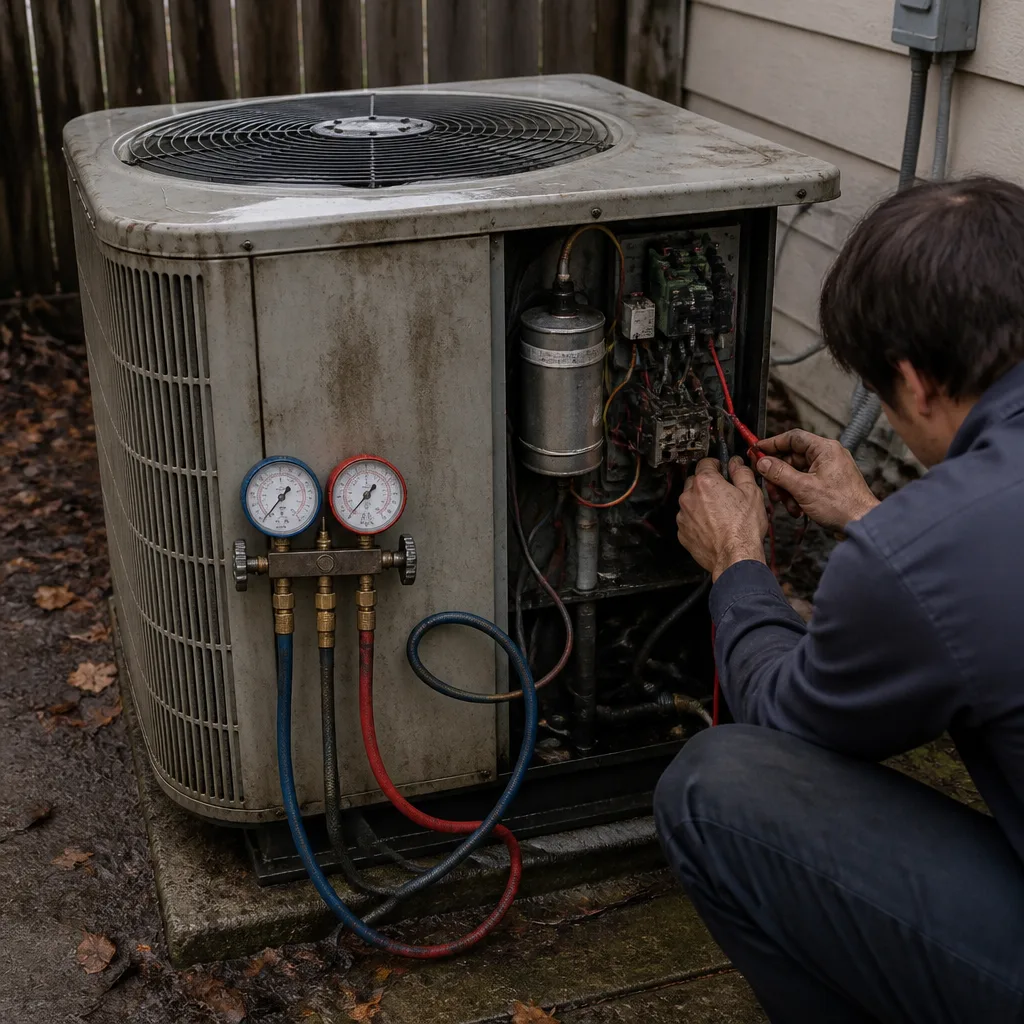 Before
 After
AfterReplacement Cost & What’s Included
A Trane capacitor replacement in Houston is a $180 to $340 job installed, and that’s the full number, not a base with add-ons. The capacitor itself runs $40 to $120 depending on whether it’s a single or dual-run design, the microfarad rating, and whether it’s a Trane-labeled part or a quality aftermarket match. The labor is the rest: a service call, diagnosis, confirming the right spec, swapping the part, testing the system under load, and cleaning up.
What pushes the price toward the top of that range: dual-run capacitors with higher microfarad ratings, Trane OEM parts for newer variable-speed equipment, or when the capacitor failure has stressed the contactor and both need replacement at the same time. What pushes it toward the bottom: a single-run capacitor on an older XR or XL unit where the part is common and the swap is straightforward.
Every capacitor replacement we do in Houston includes a written price before any work starts. That means you see the diagnosis, the part cost, and the labor in writing, and you approve it before our technician touches a screwdriver. The work is backed by our 365-Day Done Right Promise. If the capacitor fails within a year, we replace it. No runaround, no fine print.
DIY or Call Us?
I want to be straight with you about this part, because a capacitor holds a charge even after power is off. It can discharge into you, a tool, or the control board if you don’t know exactly how to handle it. Inside the condenser is line-voltage wiring, and the capacitor terminals stay energized after the breaker is off until the stored charge bleeds down. This is a genuinely dangerous part to replace without training, and the risk isn’t a small burn, it’s a serious shock or a fried control board that turns a $250 repair into a $900 one.
What you can safely do is look. Turn the breaker off at the main panel, and if you’re comfortable opening the condenser’s access panel, look at the capacitor without touching it or any wires. A swollen top, a rusted seam, or oil residue tells you what’s wrong. You can also read the label and take a photo of it, which actually helps us match the part before we arrive. But the swap itself, in a Trane unit? That’s a trained-professional job. Call (346) 201-5395, tell us what the house is doing, and we’ll figure out what it actually needs. We’ll have the right capacitor on the truck and a live person on the phone.
FAQs
In Houston’s climate, a Trane capacitor typically lasts 5 to 12 years, with most failing between year 7 and 10. The Gulf Coast’s combination of heat, humidity, and frequent summer cycling shortens their life compared to cooler climates. If your Trane is over 10 years old and on its original capacitor, it’s already on borrowed time. Call (346) 201-5395 and we’ll check it during a tune-up visit.
No. A capacitor is a sealed component, and once it fails, whether from heat, age, or a power surge, it’s not serviceable. The only correct fix is a replacement with a new part matched to the motor’s microfarad and voltage rating. We don’t patch capacitors, and you shouldn’t trust anyone who says they can.
A Trane capacitor replacement takes 30 to 60 minutes once our technician is at your unit. That includes shutting down power, discharging the old capacitor safely, removing and replacing the part, reconnecting the terminals, and testing the system under load to confirm the compressor and fan are pulling correct amperage.
We stock the most common Trane-compatible capacitor ratings on our trucks, including dual-run capacitors from 30/5 through 80/10 µF, in both 370 and 440 VAC ratings. For less common variable-speed units, we can usually source the part from our Houston-area supplier the same morning, and we’ll let you know the timing before we schedule anything. If your condenser is a standard single-stage Trane, the part is almost certainly on the truck today.
If your Trane is showing any of the signs above, or if you just want us to check the capacitor’s rating while we’re out for a tune-up, call (346) 201-5395. A live person answers, day or night. We’ll give you a straight answer and a written price before any work starts.
Written by Luis Serrano, Owner, Meadowsweet Heating and Air Houston at Meadowsweet Heating and Air Houston, serving Houston and nearby areas.