
 Furnace & heating
 AC repair
 Heat pumps
 Ductless mini splits
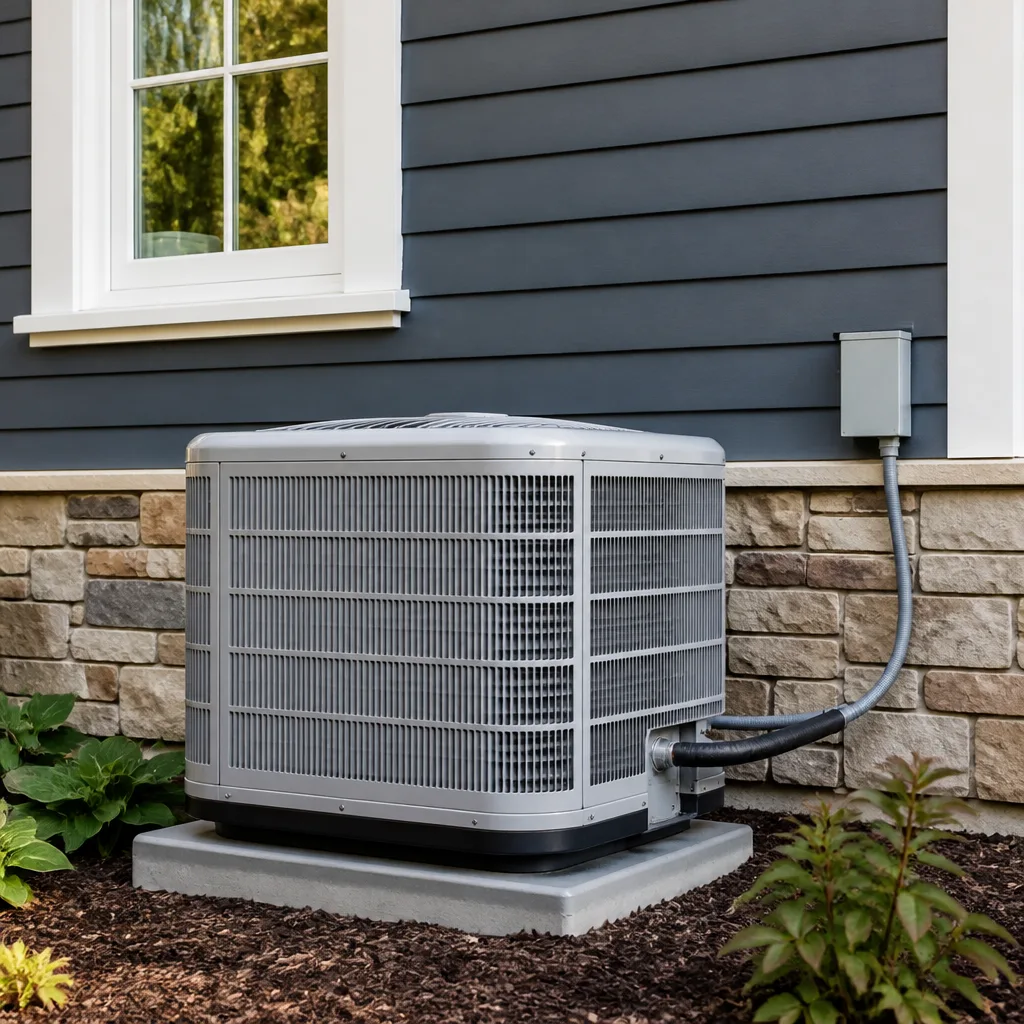 Carrier
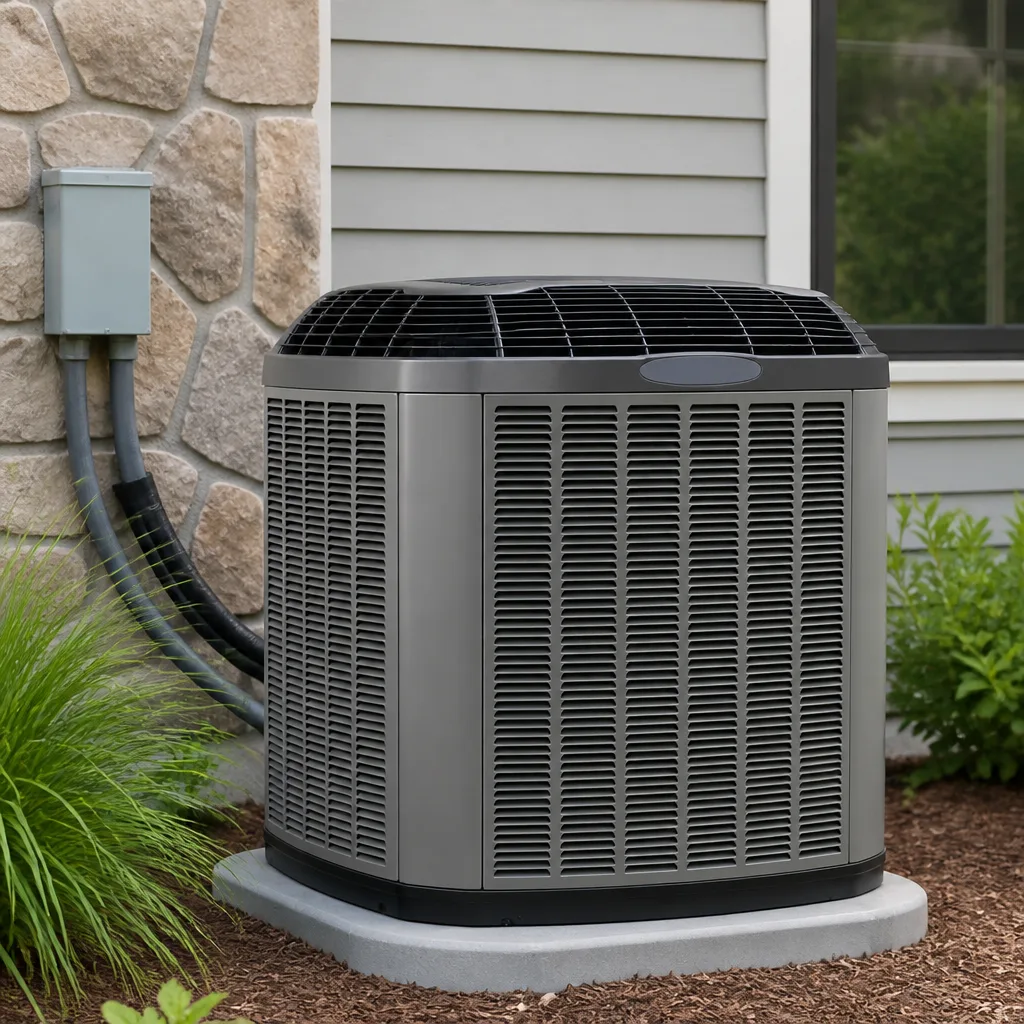 Trane
Trane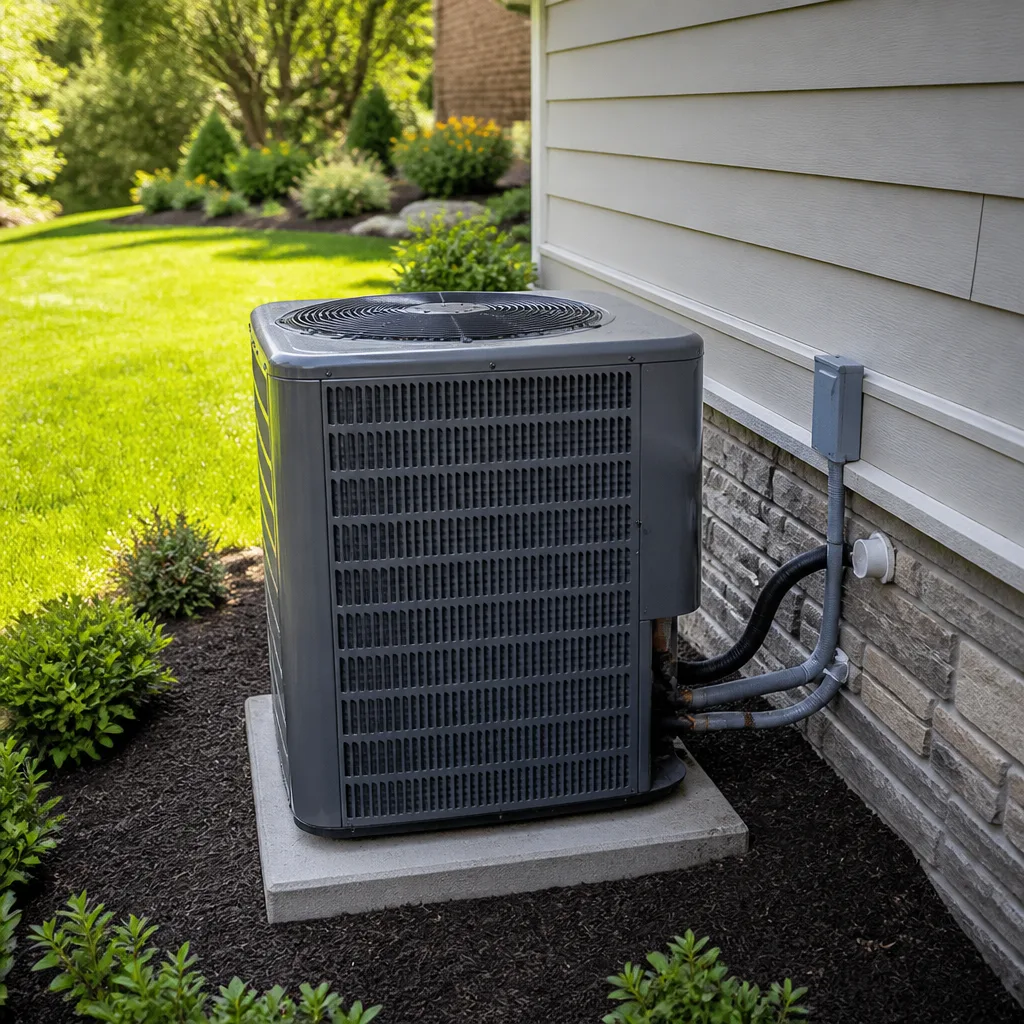 Goodman
Seasonal tune-up and full diagnostic on your Carrier, Trane, or Goodman system - readings shown to you before any repair is proposed
Diagnosis first, numbers second - you approve the repair price before a single part goes in.
Get your free estimateCarrier Capacitor Replacement: The Houston Owner’s Guide
A Carrier capacitor replacement in Houston typically runs $150 – $400 installed, depending on whether your system needs a single run capacitor or a dual capacitor that serves both the compressor and the outdoor fan motor. We stock Carrier-compatible capacitors on our service trucks throughout Houston, so in most cases we can have your system cooling again the same day you call. The way Houston owners usually find out is abrupt: the outdoor unit hums but the fan won’t spin, or the compressor tries to start and then clicks off. Sometimes the air still moves through the vents, but it’s warm air, and by then the capacitor has been failing for a week or more.
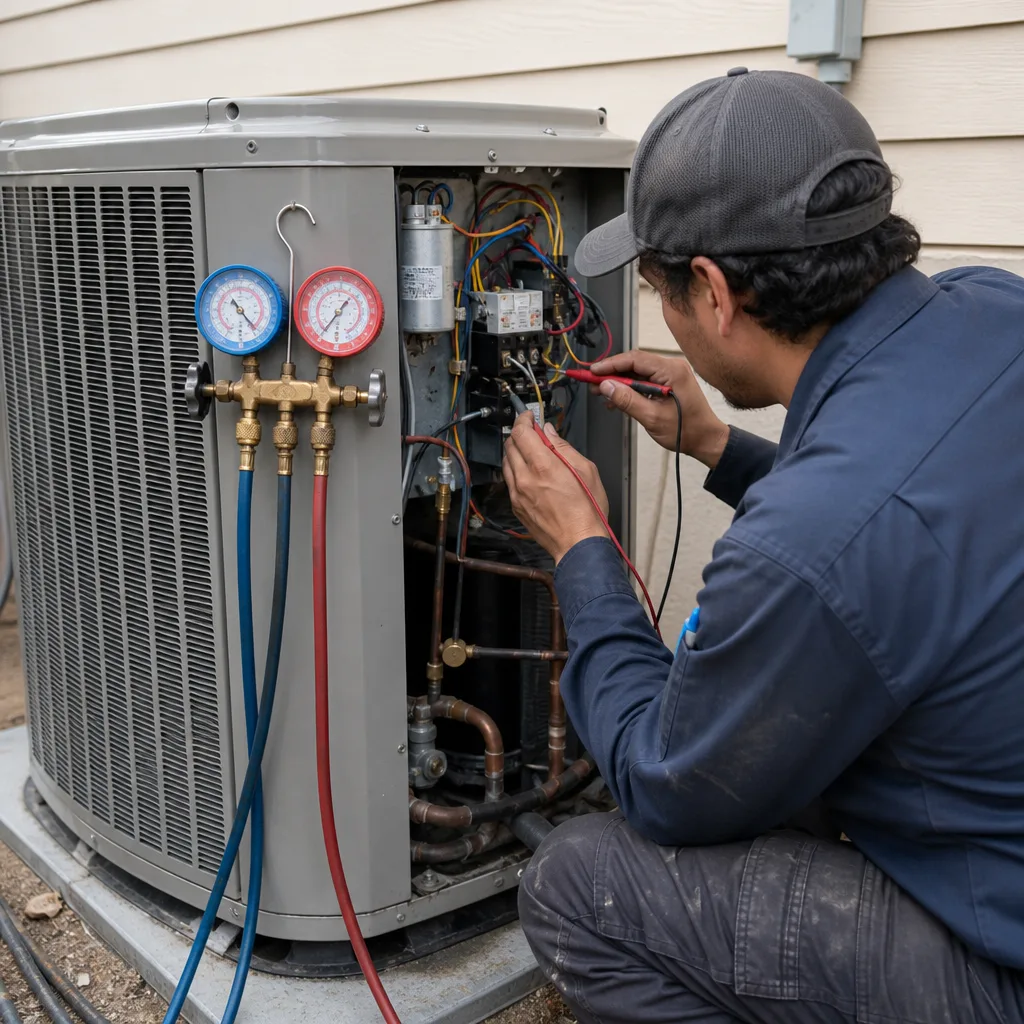
Luis Serrano has seen this exact failure pattern in Houston homes from Katy to Pearland. A capacitor is a wear item, plain and simple, and Texas heat shortens its life faster than the manufacturer’s average. When you call (346) 201-5395, we’ll ask what the system is doing, check the capacitor on site with a meter, and give you a written price before any work starts. That’s how the Meadowsweet crew has always handled it.
Key Takeaways
- Installed cost: $150 – $400 for most Carrier residential systems in Houston
- Same-day replacement available in most cases, capacitors are stocked on our trucks
- OEM Carrier capacitors and quality American-made aftermarket equivalents are both available
- Every job includes the 365-Day Done Right Promise and a written price before work begins
- This part is electrical and can hold a charge. We never recommend a homeowner open the unit.
Which Carrier Models This Applies To
The capacitors we replace cover nearly every residential Carrier line installed in Houston over the past 25 years: Comfort Series, Performance Series, Infinity Series, and older units like the 38CKC, 38TKB, and the builder-grade 38BRC condensing units. If your Carrier was installed in a Houston-area home between roughly 1998 and today, there’s a very good chance we can match it. The compatibility gotcha most homeowners don’t know: Carrier uses both 370-volt and 440-volt rated capacitors depending on the year and the specific condenser, and the two are not interchangeable. A 440-volt capacitor will work in a system designed for 370-volts, but installing a 370-volt capacitor into a 440-volt system will fail early and can damage the compressor. This is precisely the kind of mismatch we check before quoting anything.
You can find the needed information on the side of the capacitor itself: microfarad rating (µF), voltage rating, and the shape and spacing of the terminals. Carrier dual run capacitors in Houston’s most common 3-ton and 4-ton systems are usually in the 35/5 µF to 45/5 µF range, though we’ve seen 60/10 µF on larger five-ton Infinity units. As for OEM versus aftermarket: Carrier-branded capacitors are perfectly good parts, but so are the American-made aftermarket equivalents from AmRad and Mars. We carry both and match the part to your budget and what’s actually in stock that day. The honest answer from the truck: a quality aftermarket capacitor with the same ratings is functionally identical and frequently costs less.
Styles & brands we work with
Signs Your Carrier Capacitor Replacement Is Failing
- Humming outdoor unit with no fan movement. The capacitor provides the starting jolt the fan motor needs. When it’s weak, the motor can’t begin spinning even though current reaches the unit. This is the most common first symptom in Houston, where capacitors degrade faster in parking-lot-level summer heat.
- Compressor short-cycling or clicking off. A failing capacitor means the compressor struggles to start, draws too much amperage, and trips its overload protection. You’ll hear the unit try to start, then click off. Left unaddressed, this short-cycling can damage the compressor itself, turning a $200 job into a $2,000 one.
- Warm air from the vents even though the blower runs. The indoor air handler may still push air, but if the compressor isn’t running because its capacitor is dead, that air is never cooled. It feels like the fan is working but the AC isn’t, which is exactly what’s happening.
- The outdoor fan spins slowly or starts only with a push. A weak capacitor can’t deliver the torque the fan motor needs to reach full speed. You may notice the fan spinning slowly on a 98° Houston afternoon or starting only after you nudge it with a stick. That fan needs to move serious air across the condenser coil.
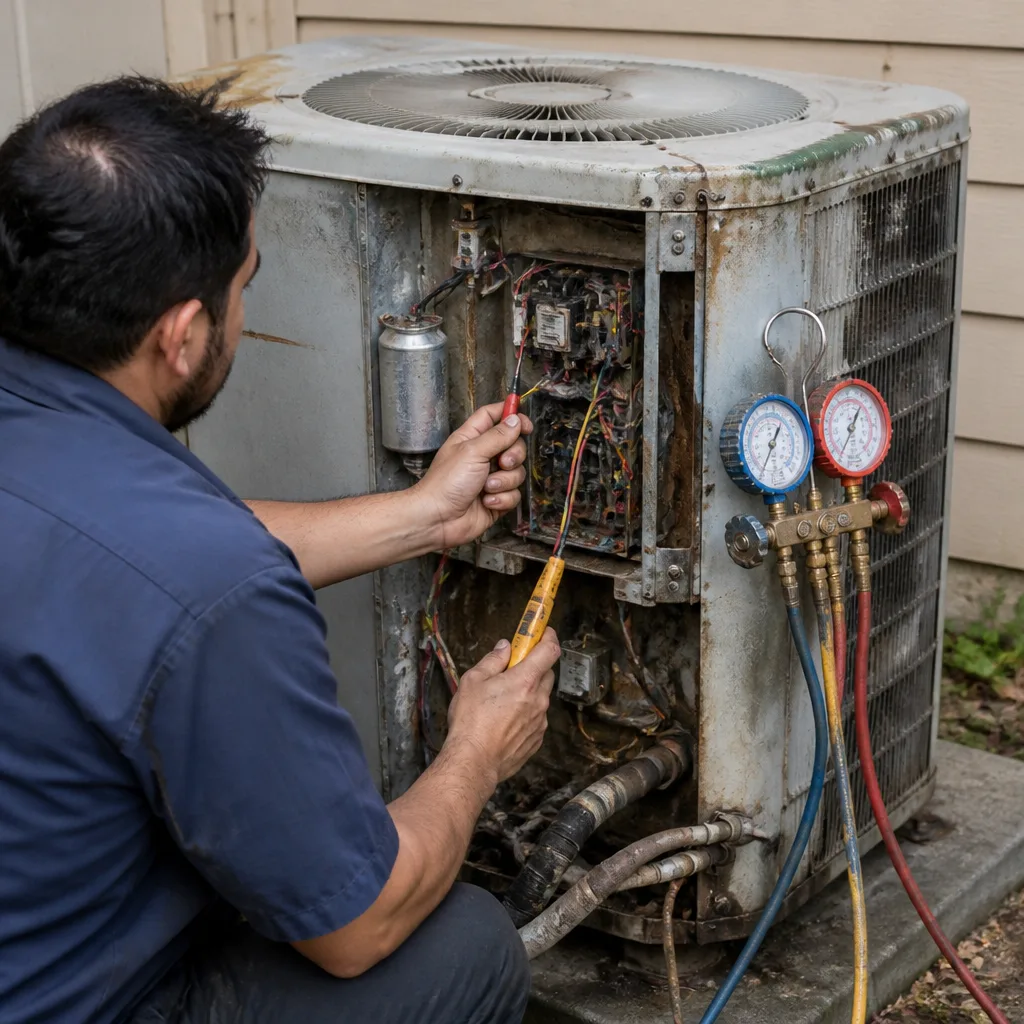
- Visible bulging or oil leaking from the top of the capacitor. Capacitors are sealed cylinders. When internal pressure builds from overheating, the top bulges or splits slightly and a small amount of electrolytic fluid can leak out. If you see a domed top on that silver or black canister inside the condenser, it’s done.
See the difference
 Before
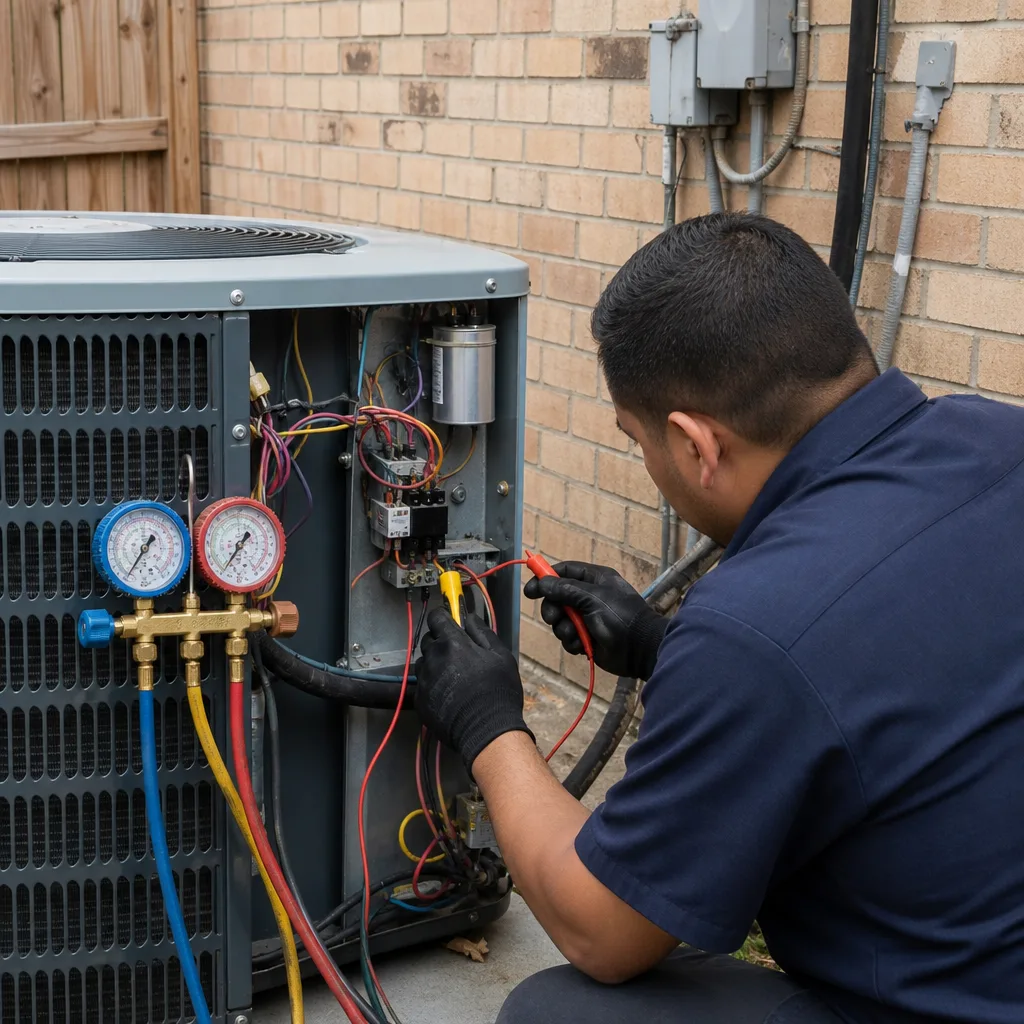 After
After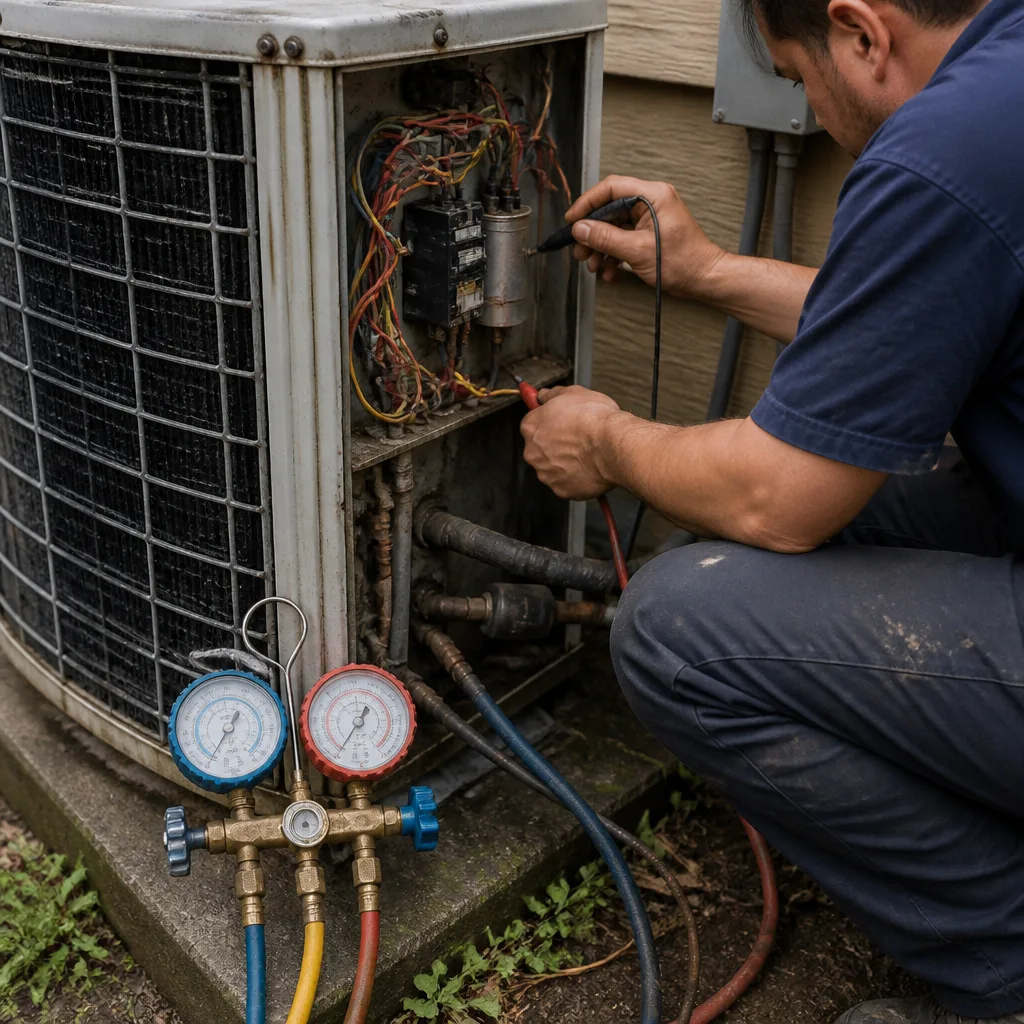 Before
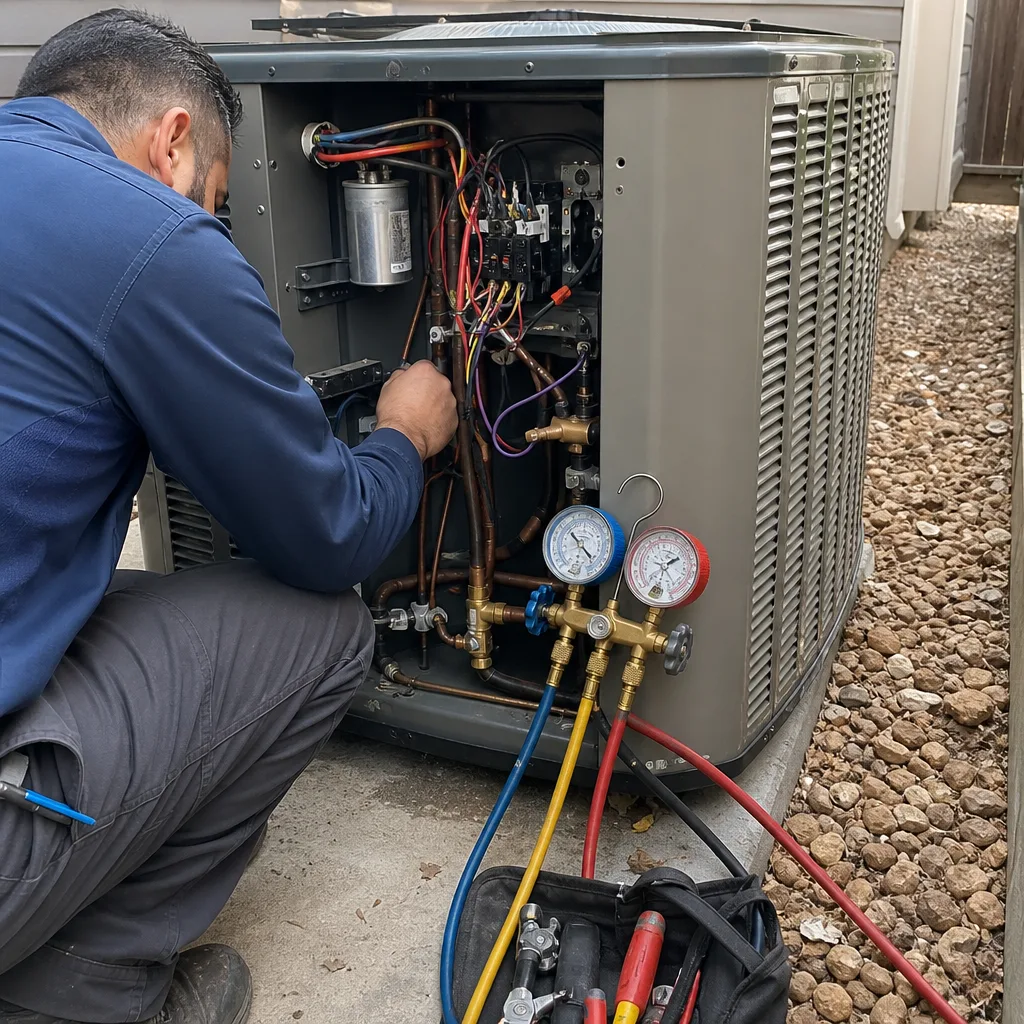 After
After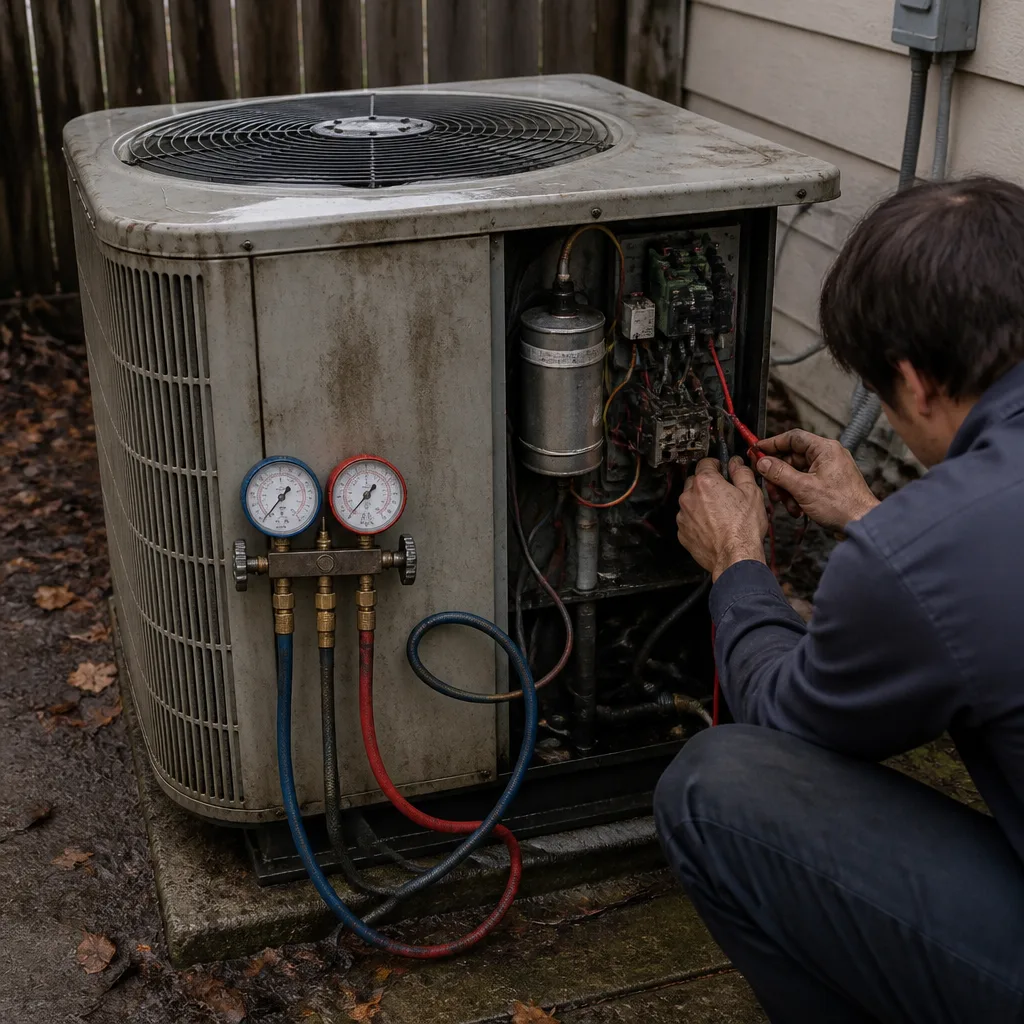 Before
 After
AfterReplacement Cost & What’s Included
Our Carrier capacitor replacement in Houston lands between $150 and $400 for the vast majority of residential systems, with most single-capacitor jobs finishing around $180 – $250 and dual-capacitor replacements on larger systems reaching $300 – $400. What moves the number: whether you need a single-run or dual-run capacitor, the microfarad and voltage rating your specific Carrier requires, and whether any secondary issue, like burnt wiring or a failing contactor, needs attention while we’re in there. We’ll always tell you if we see something else that needs watching, but we’ll never add work without showing you a written price first.
| Service | Typical Houston Installed Price |
|---|---|
| Single run capacitor replacement (fan OR compressor) | $150 – $250 |
| Dual run capacitor replacement (most common Carrier residential) | $200 – $350 |
| Dual run capacitor, larger 5-ton Carrier systems | $300 – $400 |
| Capacitor + contactor replacement (common simultaneous failure) | $250 – $450 |
Every capacitor replacement includes the part, the service call, installation, a full system test cycle, and our 365-Day Done Right Promise. We’ll show you the old capacitor with a meter reading on it so you can see exactly why it failed. That’s standard practice for Luis Serrano and every Meadowsweet tech.
DIY or Call Us?
Here’s the honest split. You can safely look at the outdoor unit from the outside and listen for that hum. You can check whether the breaker is on and whether the thermostat is calling for cooling. What you should not do is open the service panel and handle the capacitor yourself. Capacitors store voltage even after the power is off, and a charged capacitor can deliver a serious shock. We’ve taken calls from capable Houston homeowners who tried it, got bit, and then paid us to do the full job anyway. The swap itself is quick for a trained tech with the right meter and the right part. It’s not worth the risk for someone without both.
When you call (346) 201-5395, you get a live person no matter the hour, a tech who shows up in uniform, and a written price before any tool leaves the truck. Tell me what the house is doing, and we’ll figure out what it actually needs. We’ll have your Carrier running the same day in most cases.
FAQs
In Houston’s heat, a Carrier capacitor typically lasts 5 – 10 years, though we’ve replaced plenty at the 3-year mark and seen others still testing strong at 12. The pattern is heat-driven: capacitors in Houston units that run hard from May through September fail faster than those in milder climates. If yours is past year seven and showing symptoms, testing takes us about ten minutes.
No. There’s no practical way to repair a capacitor, and any attempt would cost more in labor than the part itself. Replacement is the only real fix. On the positive side, it’s one of the least expensive parts in the system, and we carry them on the truck.
Most capacitor replacements take 30 – 60 minutes from the time we open the panel to the time we close it back up. That includes testing the new capacitor under load, checking the contactor and wiring while we’re in there, and cleaning up our work area. Shoe covers go on before we walk in, and drop cloths protect the floors around the indoor unit if we need access there.
Yes. Our trucks carry capacitors for Trane and Lennox systems as well, and we regularly service all nine major brands, including Goodman, Rheem, York, Daikin, Bryant, and American Standard. The capacitor itself is sometimes the same part across brands when the ratings match, so we can often help even if your system is a different nameplate than Carrier.
If your Carrier is humming, short-cycling, or blowing warm air through a hot Houston home, call (346) 201-5395. We’ll answer live, schedule fast, and show you a written price before anything gets touched. Free estimates, every visit, no exceptions.
Written by Luis Serrano, Owner, Meadowsweet Heating and Air Houston at Meadowsweet Heating and Air Houston, serving Houston and nearby areas.