
 AC repair
 Furnace & heating
 Heat pumps
 Ductless mini splits
 Carrier
 Trane
Trane Goodman
Seasonal tune-up and full diagnostic on your Carrier, Trane, or Goodman system - readings shown to you before any repair is proposed
Diagnosis first, numbers second - you approve the repair price before a single part goes in.
Get your free estimateTrane Ductwork Repair: The Houston Owner’s Guide
Most Trane ductwork repairs in Houston run between $350 and $2,800 depending on whether we’re sealing a small section, replacing a collapsed return, or re-hanging a trunk line that’s sagged over years of attic heat. We carry Trane-compatible duct materials on our trucks and can usually complete a repair the same day we diagnose it. Here’s how Houston homeowners typically discover the problem: a bedroom never cools quite right, the electric bill climbs through a humid July, or dust appears on furniture within days of cleaning. Sometimes it’s a soft whistling sound from a ceiling register that nobody remembers hearing before. The good news is ductwork fails in predictable ways, and once we find the failure, the fix is usually straightforward. Luis Serrano has spent years tracing these failures across Houston homes, and he’ll tell you the same thing: the ductwork is the quietest part of your Trane system, and the one most often forgotten until it’s actively costing you money.
Which Trane Models This Applies To
We repair and replace ductwork connected to every Trane residential system we’ve encountered in Houston, from the XR and XL series to newer XV and RunTru equipment. The ductwork itself is not model-specific in the way a control board or blower motor is. What matters is the size, shape, and insulation of the duct runs your Trane system moves air through. Most Houston homes built before 2010 used flexible duct with R-4.2 or R-6 insulation, while newer construction and higher-efficiency Trane installations often call for R-8. That’s the first gotcha: if you’ve upgraded to a higher-efficiency Trane unit but kept the old ducts, the system may be moving air through insulation rated for a less demanding setup. A second gotcha, and one we see often in older Houston neighborhoods like Spring Branch and Meyerland, is duct sizing. A Trane XV18 communicating air handler moving 1,600 CFM needs different duct dimensions than the builder-grade system it replaced. We measure, we don’t guess. And on the OEM-versus-aftermarket question: Trane does not manufacture its own flexible duct or trunk lines, so “OEM” doesn’t really apply to duct material the way it does to a compressor or TXV. The quality difference is in the insulation rating, the R-value, the gauge of the metal components, and whether the joints are sealed with mastic or just taped. We use materials that meet or exceed Trane’s installation specifications, and we stand behind the work with the same 365-Day Done Right Promise we put on every job.
Styles & brands we work with
Signs Your Trane Ductwork Repair Is Failing
The clues are usually right there, but they’re easy to explain away. Here’s what we look for when Houston families call us about uneven comfort or high bills:
- One room is always warmer than the rest of the house. A collapsed or kinked flex duct restricts airflow to that register. The Trane system is producing the cool air; it just isn’t arriving where it’s supposed to. This is the single most common duct failure we find in Houston attics, where heat and humidity take a toll on flexible duct over time.
- Dust builds up quickly after cleaning. A disconnected or torn duct in the attic pulls in unfiltered air, insulation particles, and whatever else is floating around up there, then pushes it through your living room. We’ve found ducts that separated entirely at the boot, leaving the system half-heating the attic and dusting the whole house.
- A whistling or rushing sound from certain registers. That’s air escaping through a gap, or forced through a duct that’s undersized for your Trane system’s airflow. When the noise changes when you close a door, you’re feeling pressure imbalance caused by duct restrictions.
- The utility bill climbs without a weather change. Leaky ducts can waste 20 to 30 percent of the air your Trane equipment is producing, and that’s wasted electricity. In a Houston August, that’s real money leaving through your attic eaves each month.
- Some rooms smell musty when the AC runs. A duct with a poor seal in a humid attic will pull in humid air, which condenses inside the duct and creates the conditions for mildew growth. It’s not the Trane coil causing that smell; it’s the ductwork sweating where it shouldn’t be.
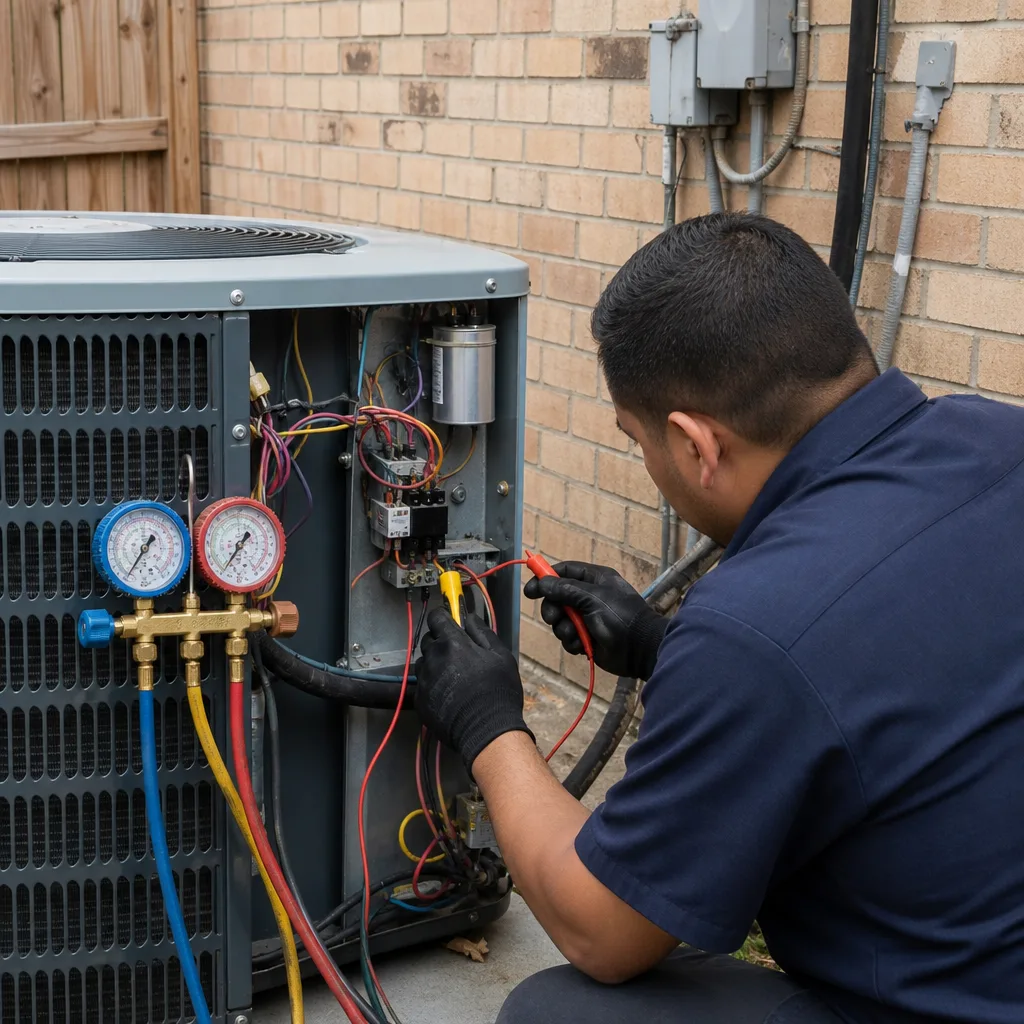
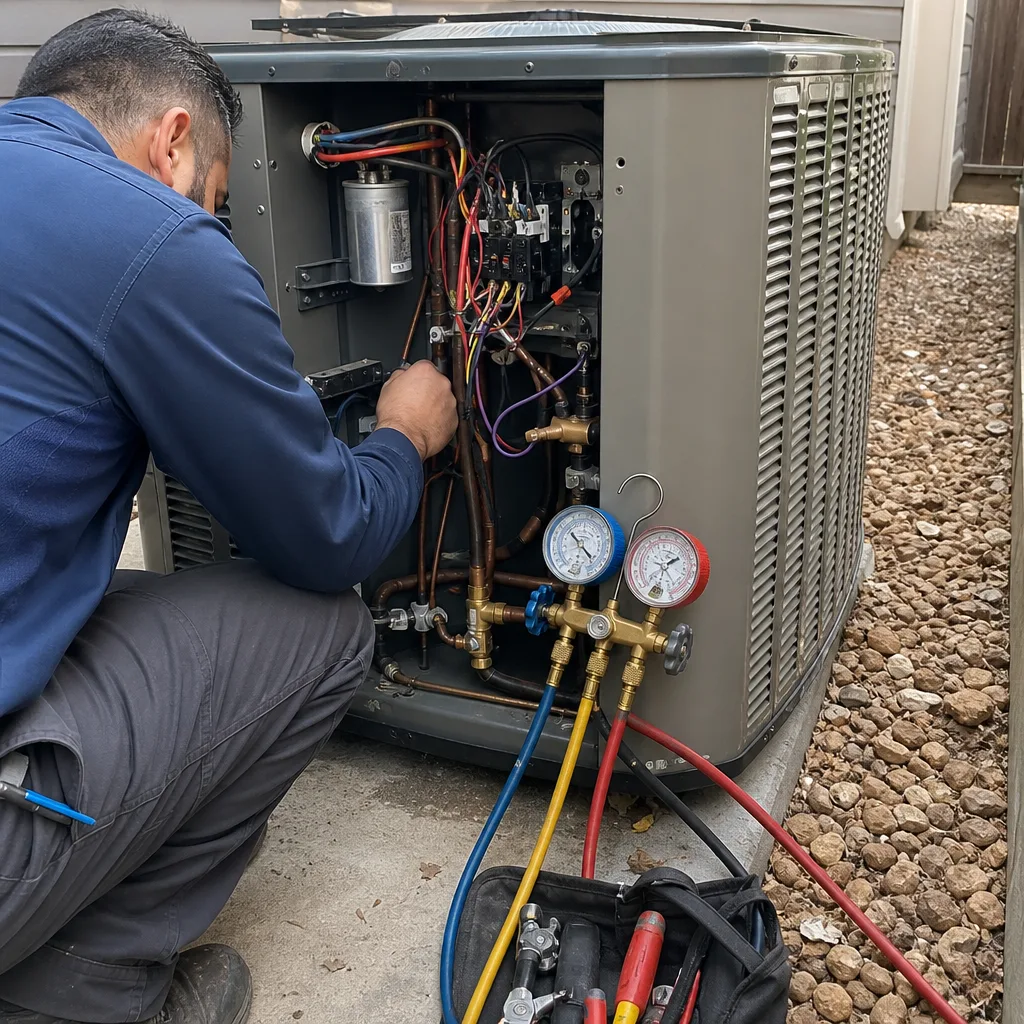
See the difference
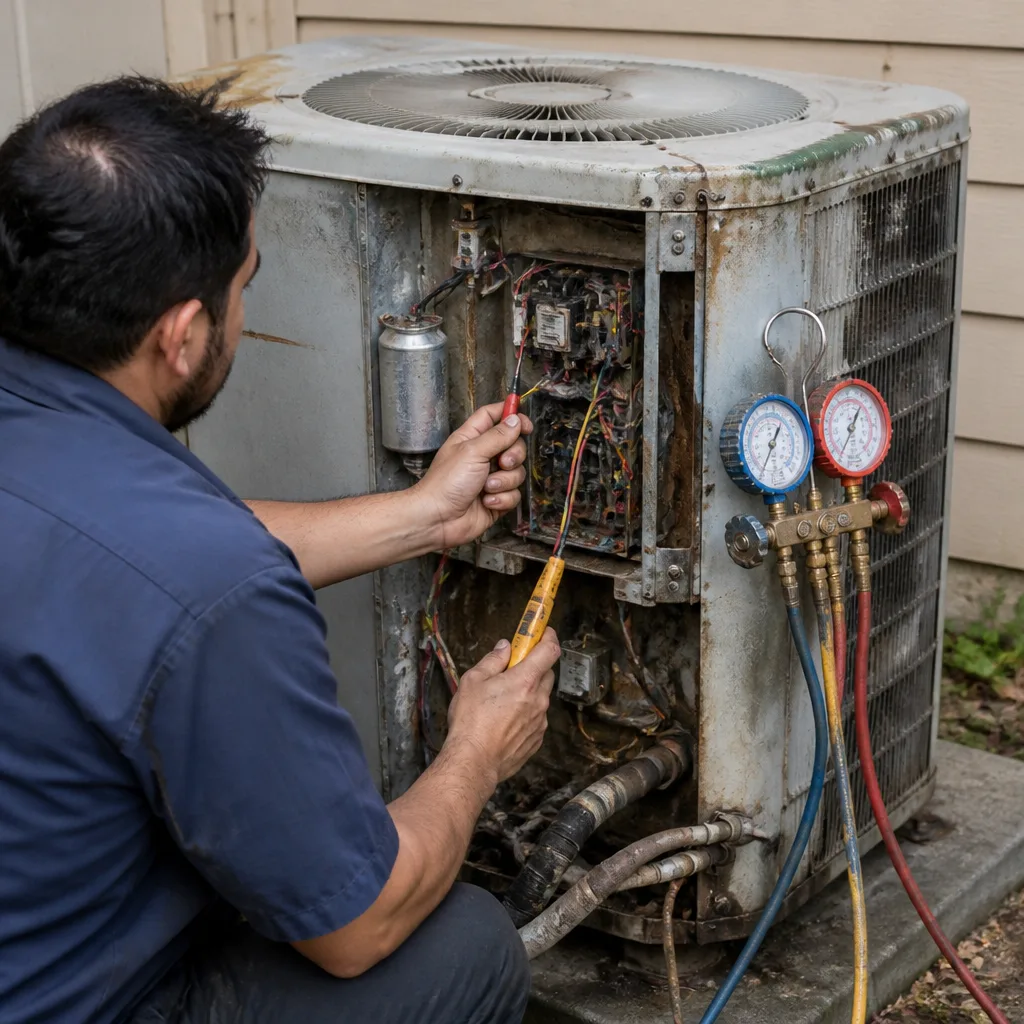 Before
 After
After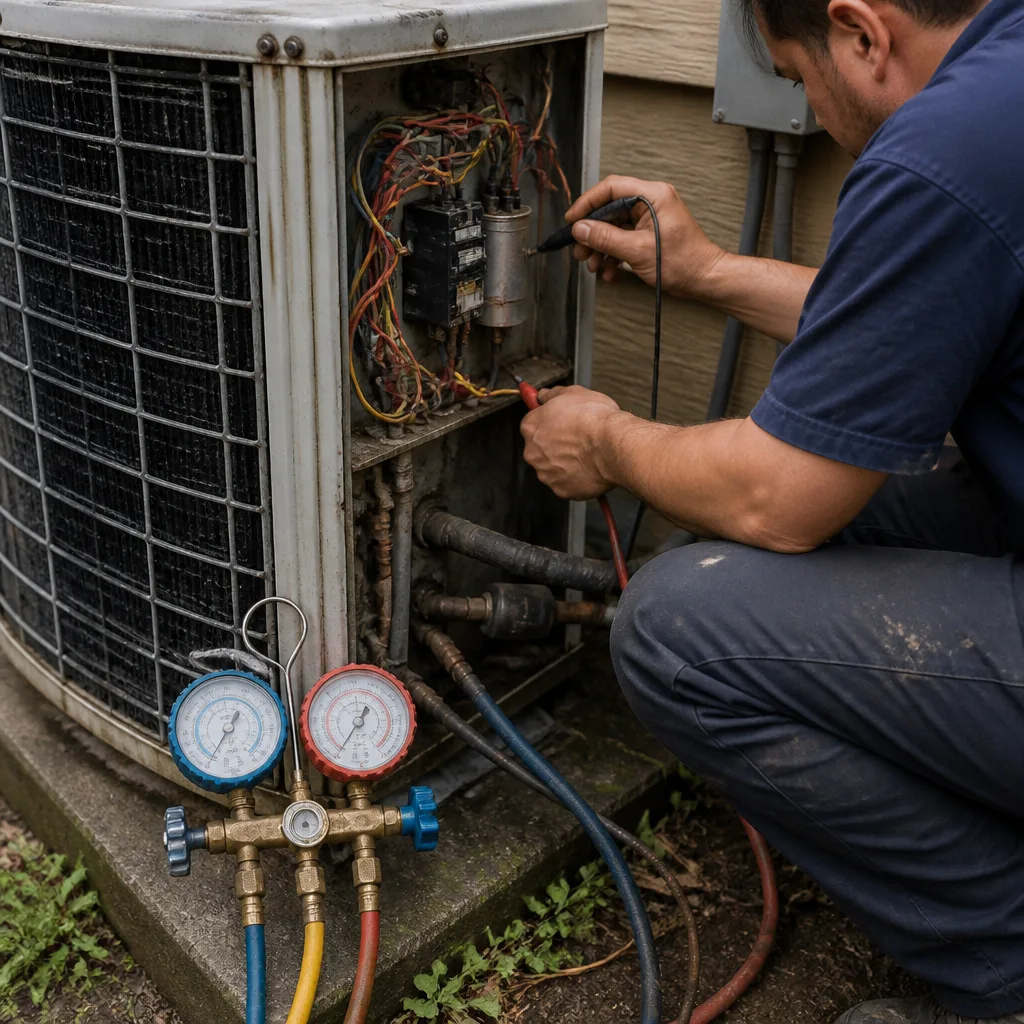 Before
 After
After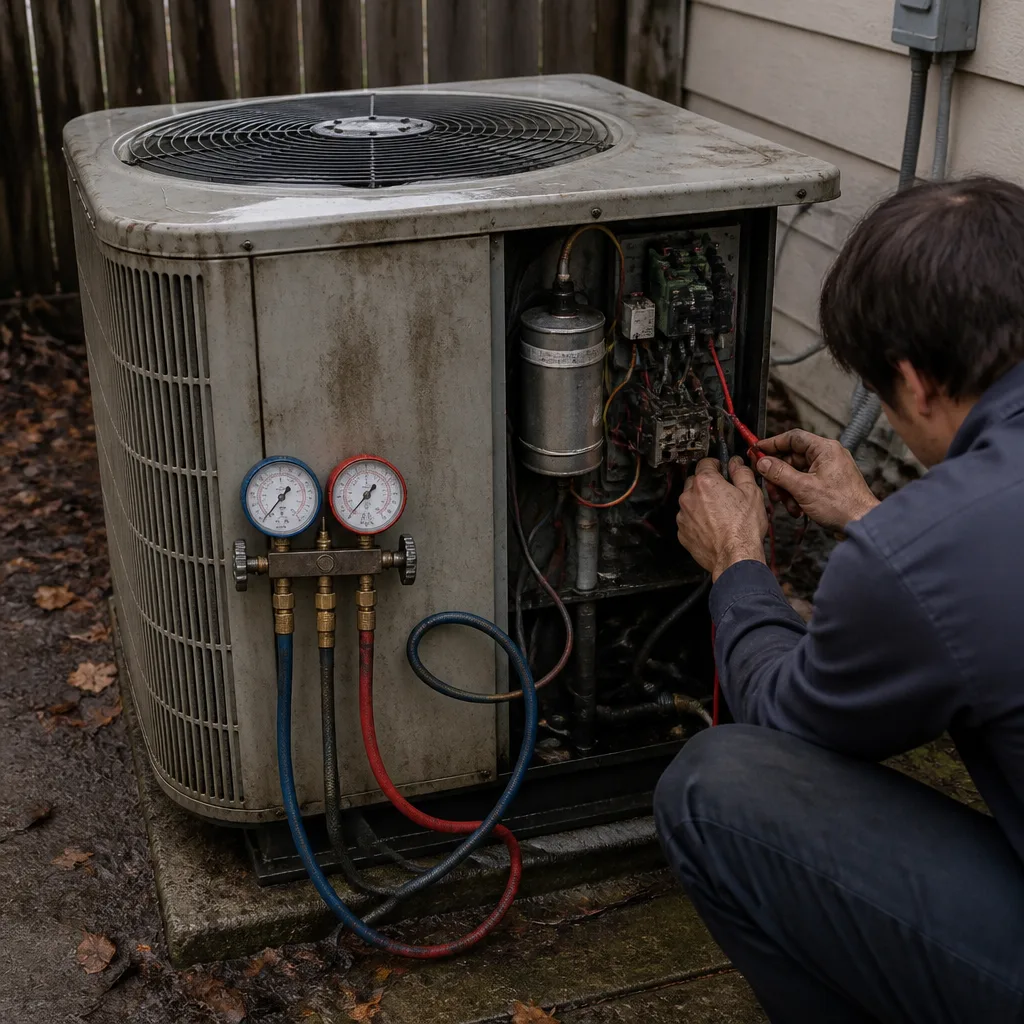 Before
 After
AfterReplacement Cost & What’s Included
You should know the price before the work starts, and you will. Every Meadowsweet visit includes a written price before any repair begins, so there’s no surprise at the end. Here’s what most Houston homeowners pay for Trane ductwork repair:
- Small, localized repair – one torn flex run, one separated boot, a short section re-sealed: $350 – $800. We’re in and out in a few hours on most of these.
- Mid-range repair – replacing multiple flex runs, repairing a collapsed trunk section, or sealing a large portion of the plenum: $800 – $1,800. These jobs involve more material and often more time in a hot attic, which is a factor in Houston.
- Extensive duct replacement – replacing most or all of the ductwork attached to one Trane system, especially when upsizing for a newer unit: $1,800 – $2,800+. These jobs stretch across a full day or into a second visit.
What drives the price in Houston specifically is attic access. A low, tight attic in an older bellaire bungalow takes longer to work in than a walkable attic in Katy. Insulation depth matters too; buried ducts mean more labor to expose, repair, and re-bury them properly. Every repair includes mastic sealing at the joints, not tape; we re-insulate any area we open; and the 365-Day Done Right Promise covers the work for a full year. If it’s not done right, we make it right. The price you’re quoted is the price you pay.
DIY or Call Us?
One honest paragraph first: ductwork repair is not a high-tension danger like springs, and not an electrical hazard like a capacitor. But it is a job that goes wrong quietly. A duct that’s sealed incorrectly will still leak, just slower, and you won’t find out until the next Houston heat wave when the upstairs won’t cool. A duct that’s hung too low will sag again, pulling more joints loose as it goes. The tools get complicated, too: mastic is sticky and doesn’t forgive mistakes, and a proper seal usually requires working in a 130-degree attic on your back. What you can do safely is look. Check visible ducts in the garage or utility closet for gaps or disconnected sections. Listen at each register while the blower runs. If you see an obvious separated boot and you want to push it back into place temporarily, that’s fine. But if the leak is in the attic, or the ducts are buried under insulation, or the airflow problem persists after your fix, call us. We’ll send a background-checked, uniformed technician who will protect your floors with shoe covers and drop cloths, explain the price in writing before work starts, and send you a photo of the clean-up before we leave. Call (346) 201-5395 for a free estimate.
FAQs
In the Houston climate, flexible ductwork typically delivers 15 to 25 years before the outer jacket breaks down, the insulation degrades, or the inner liner separates at the connections. Attic heat and humidity speed that timeline, especially in unconditioned attics that regularly exceed 130 degrees in summer. If your home is older than 15 years and you’ve never had the ducts inspected, the odds of at least one significant leak are higher than most homeowners expect. Call (346) 201-5395 for a free in-person assessment.
Ductwork can absolutely be repaired when the damage is localized. A torn flex run, a popped boot, a gap where the plenum meets the trunk line, these are repair jobs. We replace sections and full runs when the material has deteriorated to the point that patching it would just create a new leak somewhere else within a season or two. We’ll show you the condition and explain why a repair will or won’t hold for that specific duct in that specific attic.
Most single-run repairs take between two and four hours from when our technician walks in to when the clean-up photo is sent. Replacing multiple runs or a trunk section can take a full day, and we’ll tell you the expected timeline before we start. We schedule around your family’s routine, keep tools quiet during nap or school hours, and leave the home exactly as we found it.
Yes, our trucks carry flexible duct in common Houston sizes including 6, 8, 10, and 12 inch, along with R-6 and R-8 insulation ratings, boots, collars, mastic, and metal trunk components. If your job requires a non-standard size or larger amount of material than the truck holds, we’ll get it from our local supplier the same day or first thing the next morning. We also stock service parts for other brands we support, including Carrier and Lennox. Call (346) 201-5395 and we’ll tell you if what we have on the truck will cover your repair.
Written by Luis Serrano, Owner, Meadowsweet Heating and Air Houston at Meadowsweet Heating and Air Houston, serving Houston and nearby areas.